 Tchad
Tchad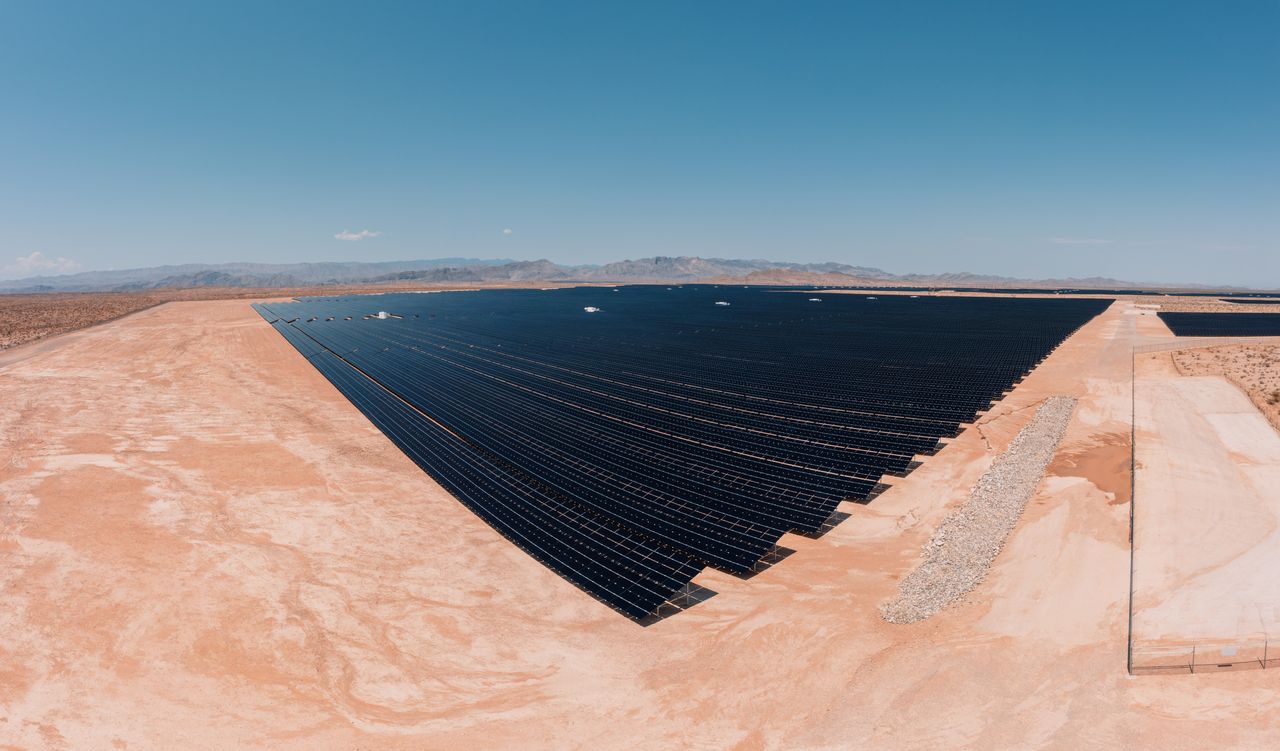
The African Development Bank (AfDB) confirmed on 5 October that it had released a first disbursement into two hybrid solar plants in Chad, closing a EUR 37.9m (XAF 24.9bn) package for 30 MWc of generation and 8 MWh of storage. The developer is Qair, a French independent power producer that opened offices in N'Djamena in December 2025 and is building its sub-Saharan portfolio from there. Chad had an electricity access rate of 11% in 2023, among the lowest in the world.
Who finances what
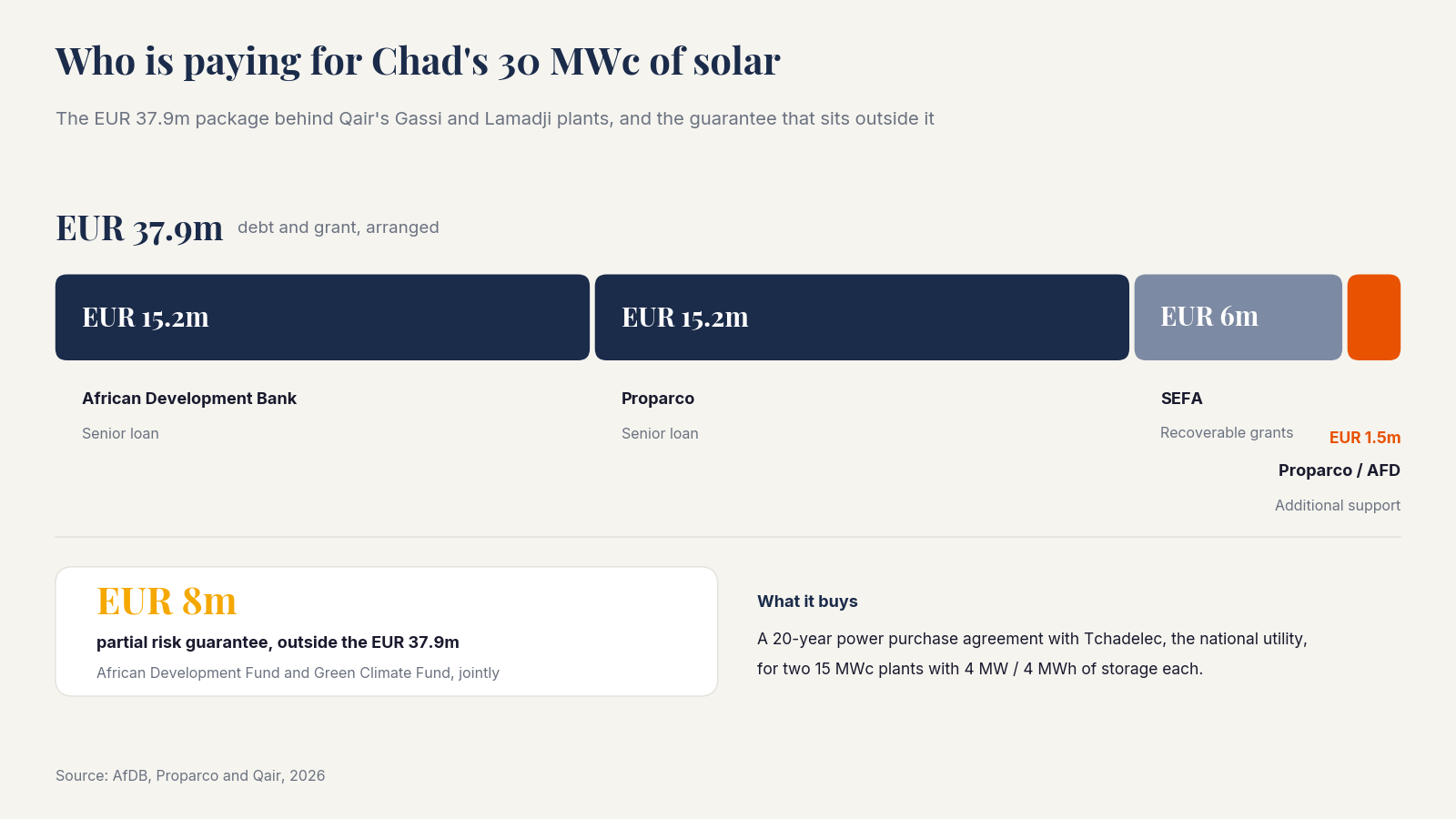
The EUR 37.9m is debt and grant rather than total project cost, and it splits four ways. The AfDB and Proparco each provide EUR 15.2m in senior loans, EUR 30.4m between them. The Sustainable Energy Fund for Africa (SEFA), managed by the AfDB, adds EUR 6m in recoverable grants, and Proparco and the Agence francaise de developpement (AFD) a further EUR 1.5m. Sitting outside that total, the African Development Fund and the Green Climate Fund jointly issue an EUR 8m partial risk guarantee. Coris Bank issues the letter of credit and acts as onshore security agent, with BNY Mellon holding the offshore accounts.
What gets built
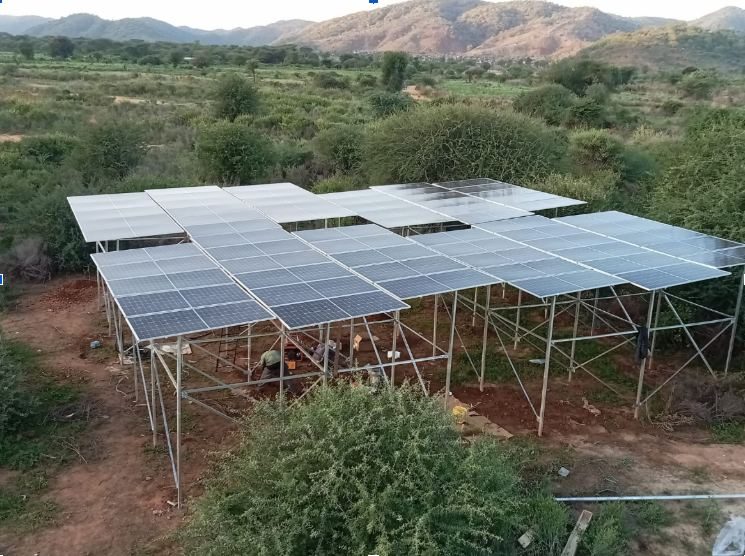
Two plants of 15 MWc each, at Gassi and Lamadji, each paired with 4 MW / 4 MWh of battery storage. Qair puts combined output at 65 GWh a year, which the project sponsors say covers around 260,000 people. Tchadelec, the national utility, is the offtaker on a 20-year power purchase agreement. No tariff has been disclosed.
Against an 866 MW target
Chad's national energy compact under Mission 300 commits to a 90% access rate by 2030, up from 11%, which means connecting more than 14 million additional people and adding 866 MW of capacity. These two plants supply 30 MWc of that, around 3.5%. The compact also targets renewables at 30% of generation by 2030.
What it means
For an energy ministry in a low-access market, the instructive part of this deal is not the 30 MWc but the €8m guarantee sitting behind it. Two development institutions had to underwrite the offtake risk before senior debt would fund a 20-year PPA with the national utility, and concessional grants had to cover the gap below that. A government planning hundreds of megawatts on this model should budget for guarantee capacity, not just for generation, because the guarantee is the scarce input. At roughly 30 MWc per transaction, reaching 866 MW becomes a question of how many such packages can be assembled, not how much sun is available.
Sources: ADB, PV Magazine:, Qair:, World Bank