 Tunisie
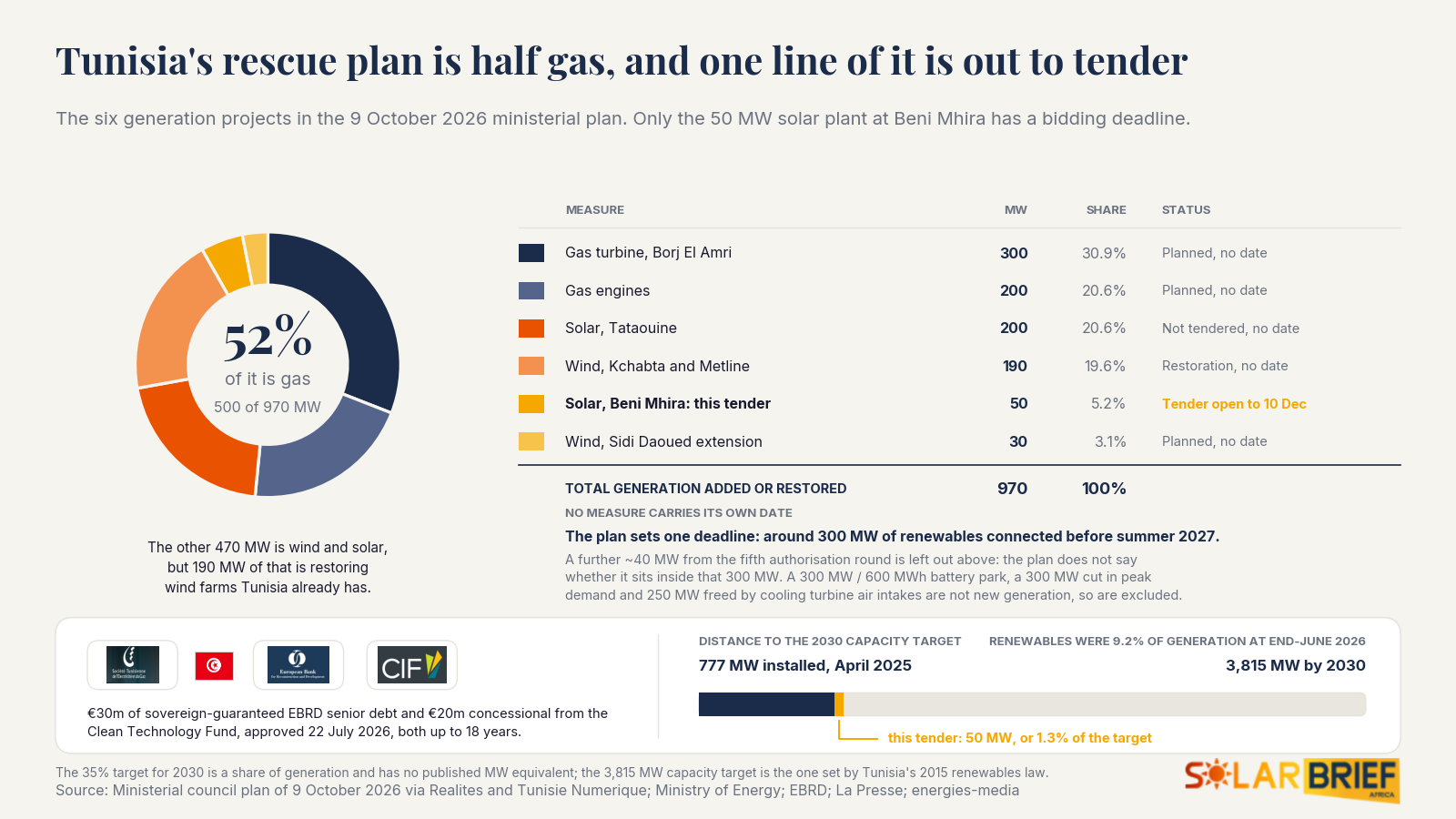
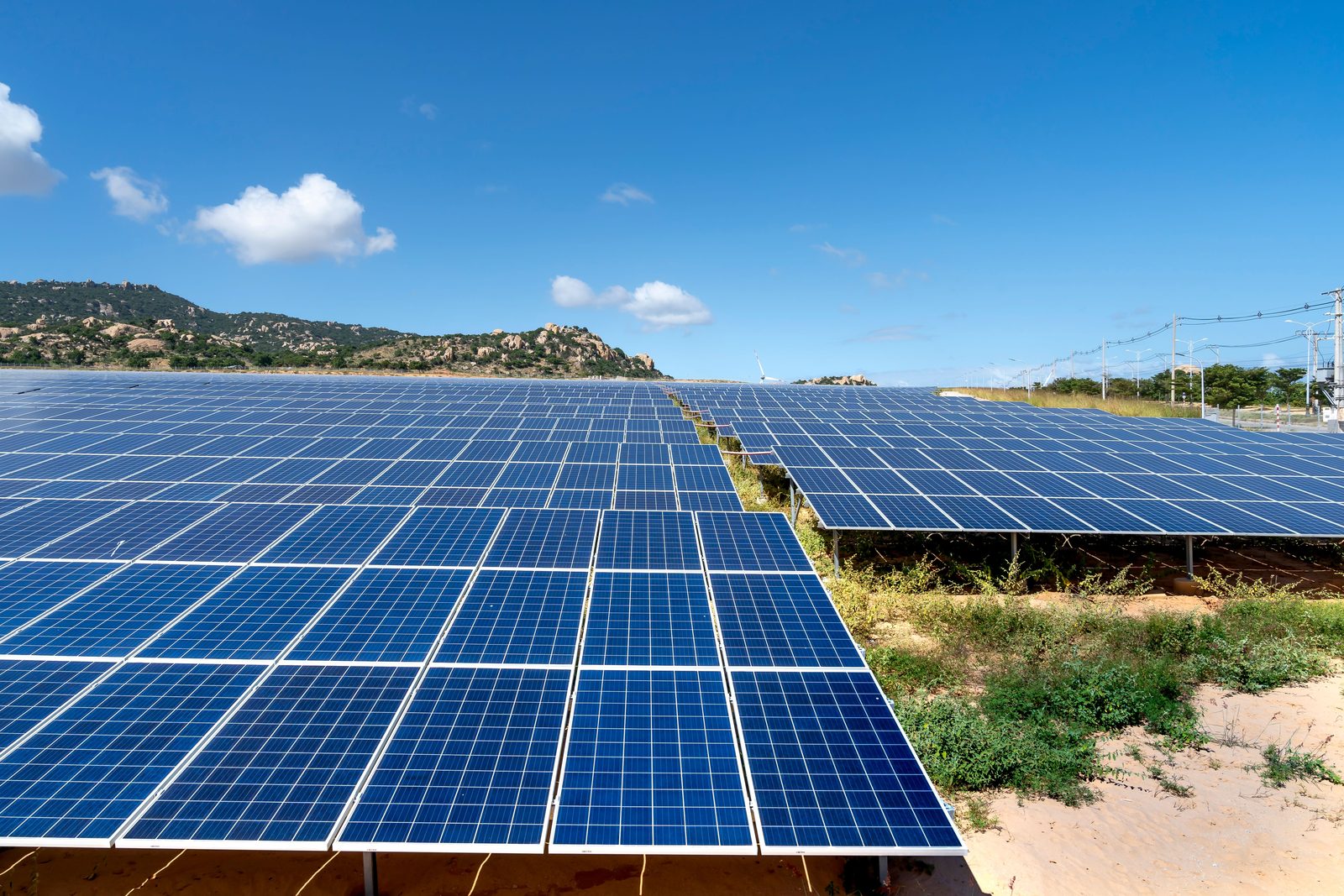
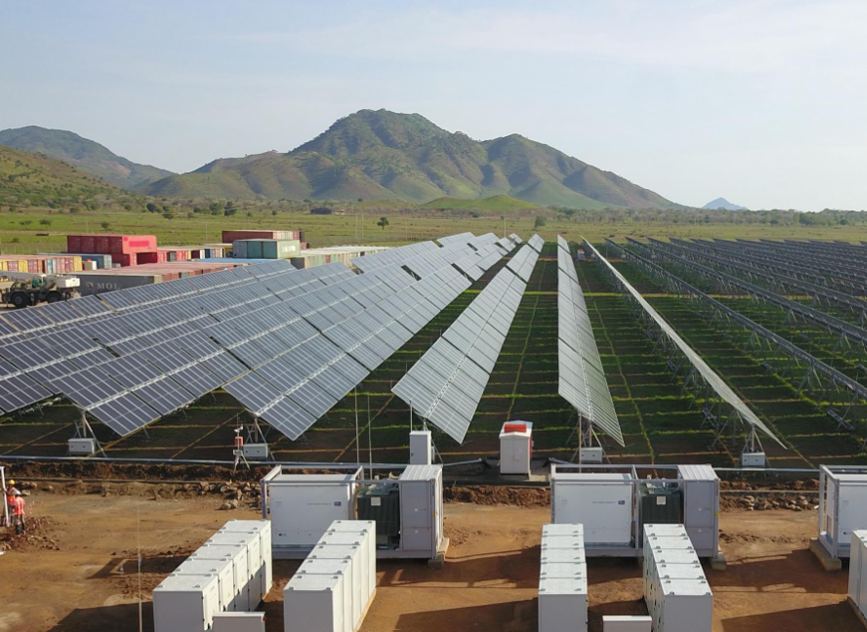
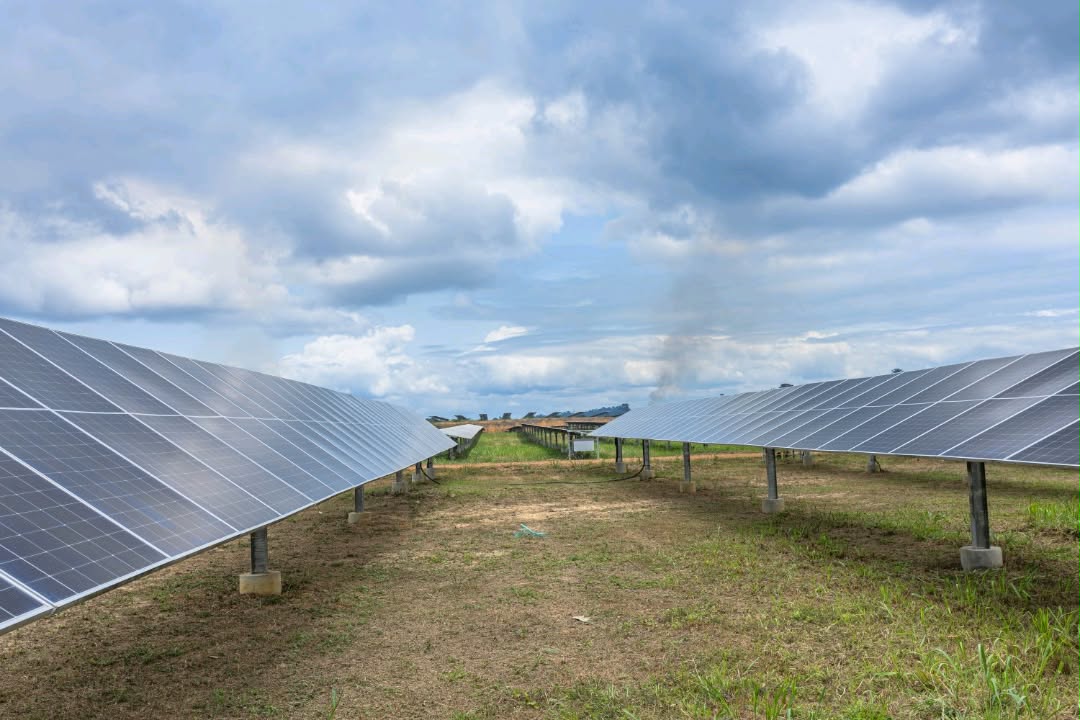
STEG opened bidding on 14 October for a 50 MW solar plant at Beni Mhira carrying Tunisia’s first utility-scale battery. Bids close on 10 December. It is the smallest of six generation projects in an emergency supply plan the government approved five days earlier, and the only one of them with a date.
What is being tendered
The contract covers 50 MWac of bifacial solar, a 10 MW / 20 MWh lithium-ion battery, and the 1.2 km, 225 kV line tying the site to the Tataouine Rouis substation. It is a design-build award on FIDIC Yellow Book terms: the contractor designs the plant as well as building it and carries the risk if it underperforms, rather than building to a design the client hands over. Procurement runs under European Bank for Reconstruction and Development (EBRD) rules with every step under prior review. The EBRD board approved €30m of sovereign-guaranteed senior debt on 22 July, alongside €20m of concessional debt from the Clean Technology Fund, both running up to 18 years.
Why a battery, and why now
Tunisia’s constraint is not annual energy, it is the evening. Demand peaked near 6,000 MW during the July 2026 heatwave against 5,944 MW of installed capacity, and STEG used load shedding to stop the grid collapsing. Solar generates at midday and does nothing for a peak that arrives after sunset, which is why the same plan demands a 300 MW cut in peak demand. Two hours of battery moves midday output into the evening. STEG tendered a further 600 MWh across ten sites on 24 September.
Where the 35% target sits
The 35% target is a share of generation, not of capacity, and no megawatt equivalent for it has been published. The capacity figure Tunisia does have is in its 2015 renewables law: 3,815 MW by 2030. Installed renewables reached 777 MW in April 2025, leaving around 3,000 MW to build in four years. Renewables supplied 9.2% of generation at the end of June 2026, up from 4.03% across 2025. Beni Mhira is 1.3% of the capacity target. The EBRD calls it a reference case for the projects that follow.
What it means
For a contractor pricing this, the shape of the award matters more than 50 MW does. Yellow Book puts design risk on the bidder, and every procurement step sits under EBRD prior review, which lengthens the process but takes the payment question off the table: the senior loan carries a sovereign guarantee and the concessional half comes from a climate fund. The battery is the part to take seriously. Nobody has built a utility-scale battery in Tunisia, so there is no local benchmark for commissioning and no precedent for performance testing, and the EBRD has rated contract risk moderately high accordingly. Whoever wins this writes the reference that the 300 MW / 600 MWh park will be procured against, and that second contract is thirty times the size on both power and energy.
Sources: PV-Magazine, Realities, Solar Perspective