 Tunisie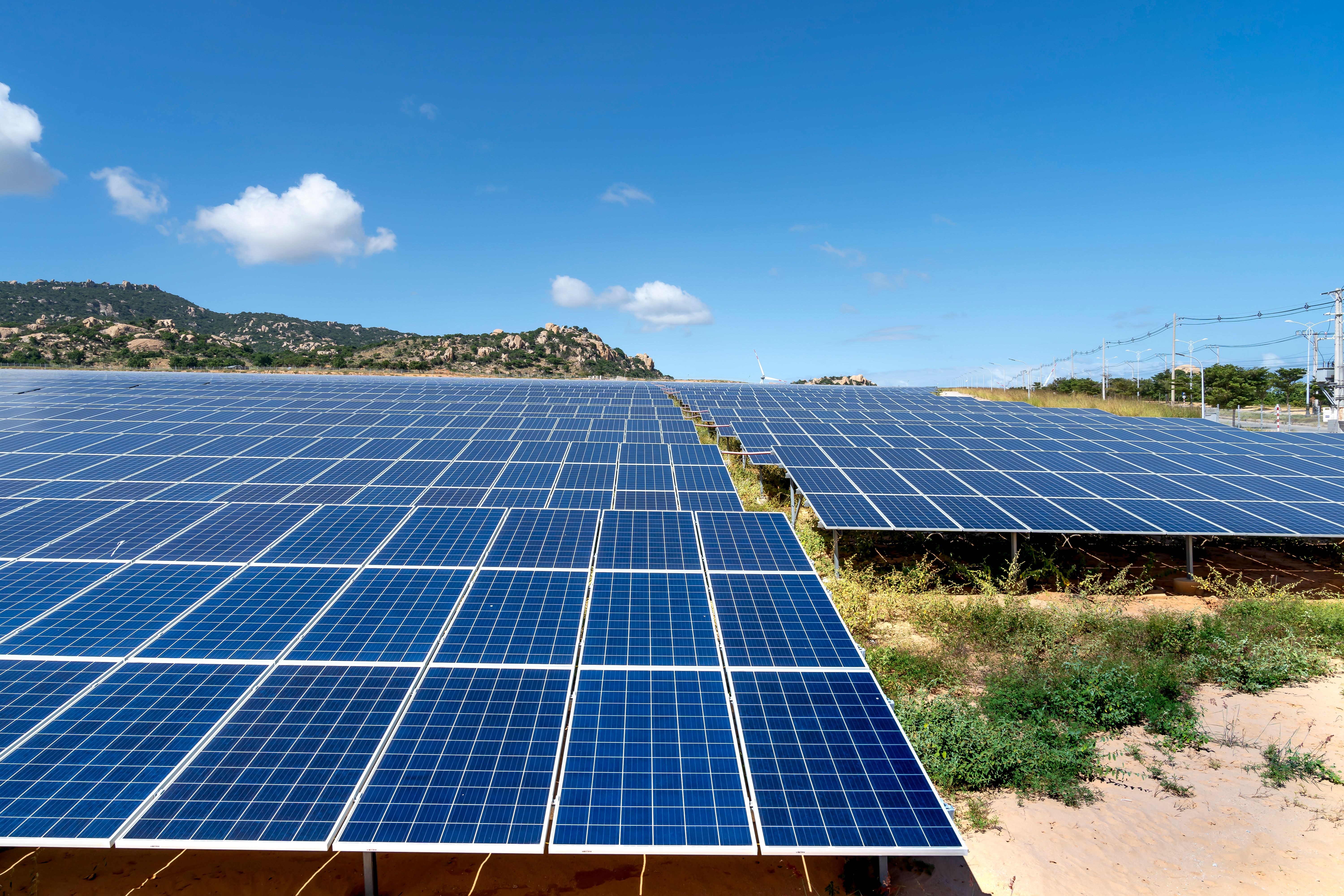
What STEG does here
The authorisation regime, created by law 2015-12 of May 2015, allows private developers to build plants of 1 to 10 MW and sell their output to the Société Tunisienne de l'Électricité et du Gaz. STEG is the sole offtaker and also determines the connection point after conducting its own network study. Purchase prices are set by ministerial order rather than by bidding: TND0.217 per kWh up to 1 MW, TND0.201 per kWh up to 2 MW, and TND0.142 per kWh between 2 and 10 MW. STEG accounted for 91% of national generation at the end of June 2026, so each of these 309 developers will sell to the incumbent it is displacing.
The target
Tunisia raised its renewables goal from 30% to 35% of the power mix by 2030, a revision made in 2022. Renewables accounted for 9.2% of generation at the end of June 2026, according to STEG's own figures. The national energy strategy sets the 2030 requirement at 4,850 MW of installed renewable capacity, making this round worth less than a tenth of that target.
What it means
What it means for public decision-makers The oversubscription is the finding here. Tunisia asked for 200 MW at prices it set itself, with no auction, a 10 MW ceiling and one state buyer, and drew more than twice that from 309 separate applicants. Most are individuals and small consortia in Gafsa, Sidi Bouzid, Kébili, Médenine and Tataouine rather than established developers on the coast. For a regulator elsewhere designing a small-scale regime, the signal is that administered tariffs and a size cap did not suppress appetite. They widened who could apply. The harder question Tunisia now inherits is whether STEG can connect and pay 309 counterparties at once, which is where regimes of this kind usually fail rather than at the application stage.
Sources: PV Magazine, Tunisia Ministry of Industry, Mines and Energy, Renewables Now, Renewables Now, Africa Energy Portal