 Cameroun
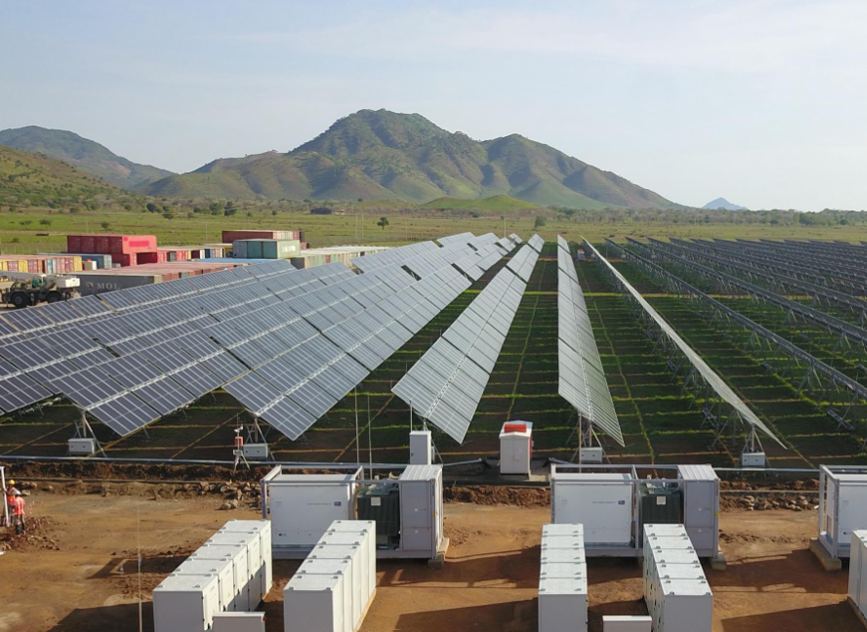
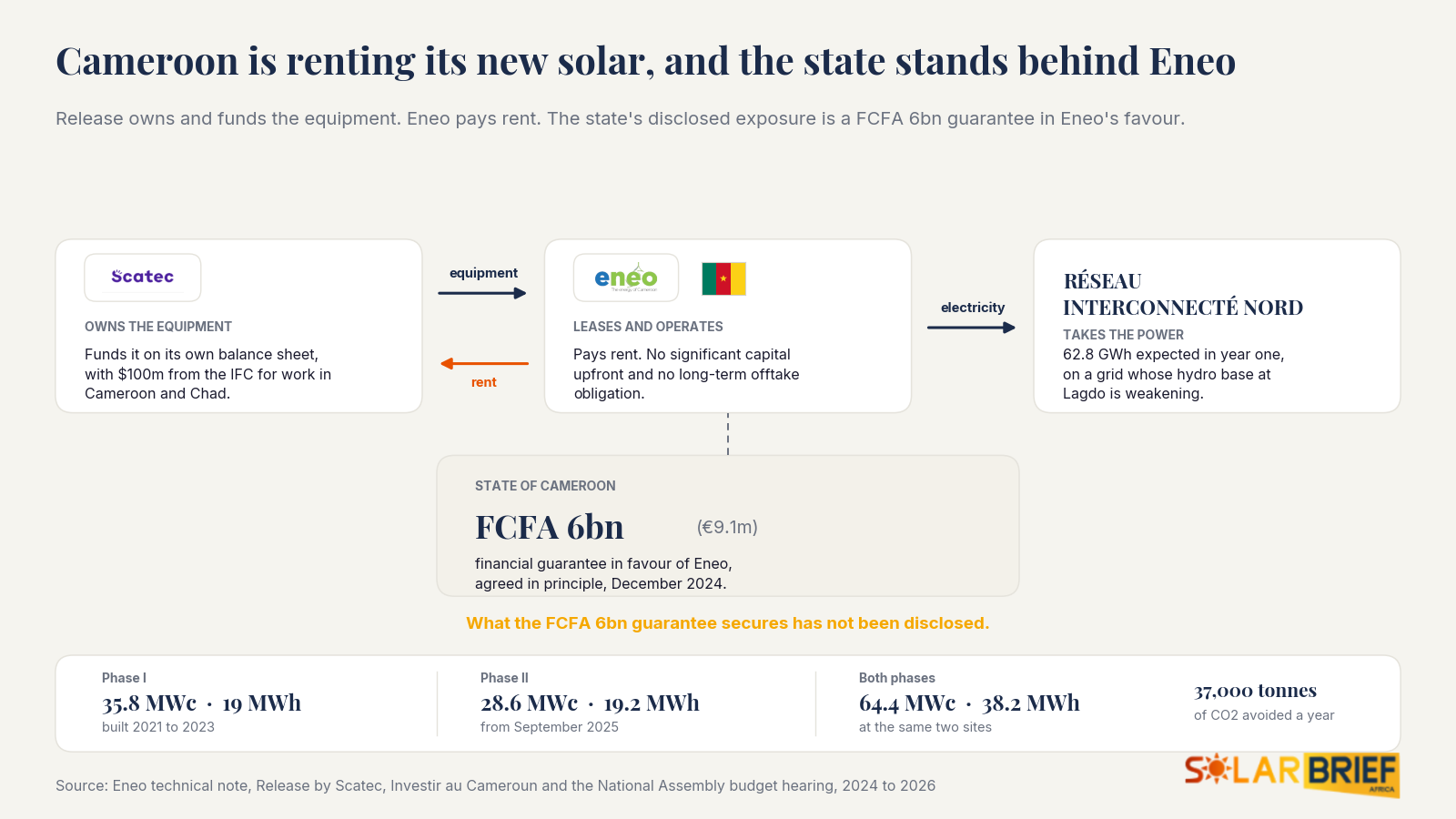
Eneo is doubling two solar plants in northern Cameroon without borrowing for them. Release by Scatec owns the equipment and rents it out. The state’s disclosed exposure is a FCFA 6bn guarantee in Eneo’s favour, and nobody has published what it secures.
What is being built
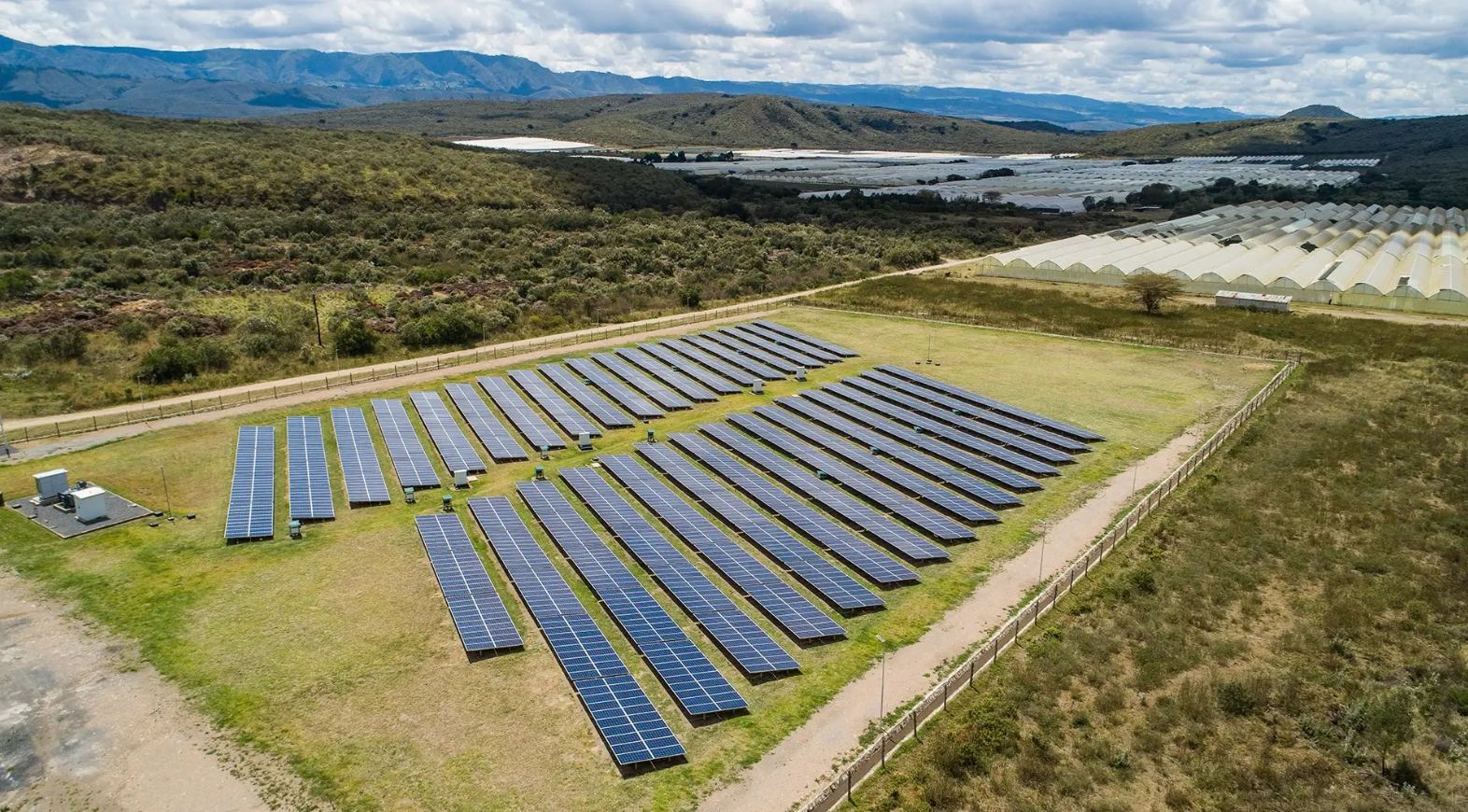
Guider II adds 8.8 MWc on 18 hectares at Sanguere-Kolas, 2.5 km from the first plant. Maroua II adds 19.8 MWc with 19.2 MWh of storage on 39 hectares at Mayel-Ibbé. Together that is 28.6 MWc and 19.2 MWh, expected to produce 62.8 GWh in the first year and avoid 37,000 tonnes of carbon dioxide annually. Work started in September 2025 and the first megawatts reach the grid during 2026.The two plants already carry 35.8 MWc and 19 MWh, built between November 2021 and February 2023, so the extension takes them to 64.4 MWc.
A lease, not a power purchase agreement
Release by Scatec supplies modular solar and storage on a flexible lease with a purchase option. It funds the equipment itself: Scatec ASA holds 68% and Climate Investor One, managed by Climate Fund Managers, holds 32%, and Release has drawn around FCFA 60bn ($100m) from the International Finance Corporation for projects in Cameroon and Chad. Eneo takes delivery, operates the plants and pays rent. It commits no significant capital upfront and signs no long-term offtake obligation of the kind an independent power producer would need. Eneo’s own technical note calls the model fully pre-financed and without sovereign guarantee.
The guarantee that does exist
The state is not absent. In December 2024 the minister of water and energy, Gaston Eloundou Essomba, told the National Assembly’s finance committee that the finance ministry had agreed in principle to a FCFA 6bn (€9.1m) financial guarantee in favour of Eneo for the extension. That is the whole of the disclosed public exposure. Eneo is 51% owned by Actis, 44% by the Cameroonian state and 5% by its staff, and operates about half the country’s installed capacity.
What it means
For a ministry that cannot credibly issue a sovereign guarantee, this is the structure to study. The usual route to new capacity is a twenty-year power purchase agreement the state backstops, which is why so many African solar programmes stall at the guarantee negotiation rather than at the tariff. Cameroon has let the vendor keep the asset instead. Release carries the equipment on its own books, Eneo pays to use it, and the public commitment is FCFA 6bn standing behind rent rather than two decades of offtake. The trade is real. Rent over time costs more per megawatt-hour than debt a utility raises itself, and the utility owns nothing at the end unless it exercises its option. What it buys is speed and a far smaller contingent liability, and the test has now been run twice at the same two sites, which is the strongest available evidence that the first round worked.