 Gabon
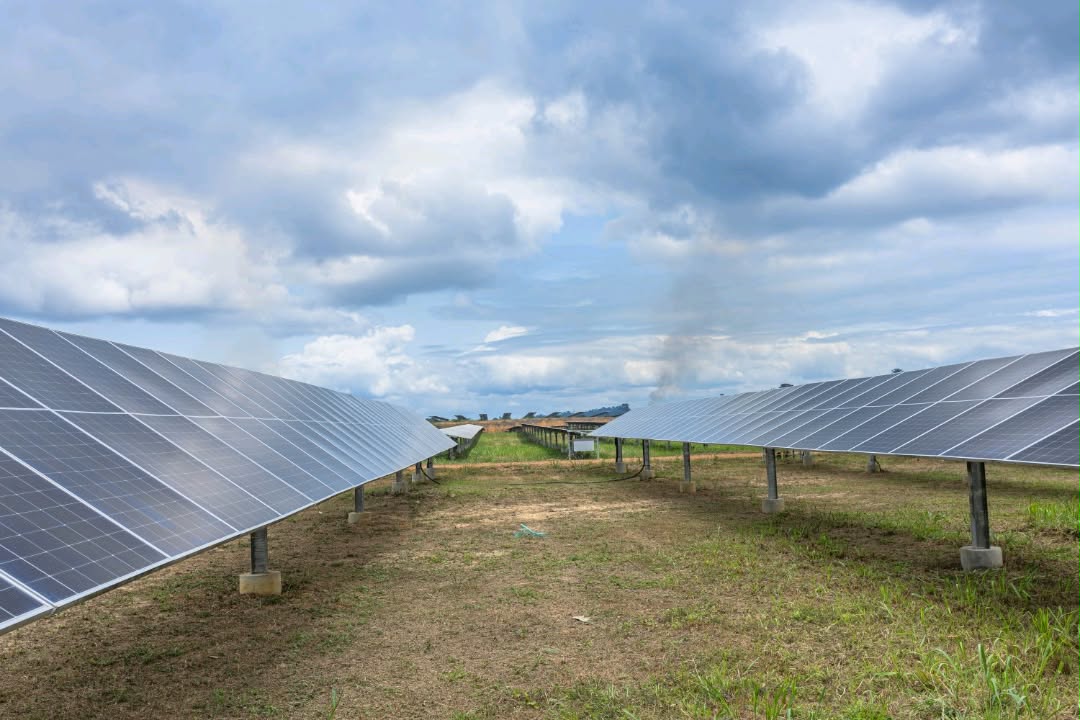
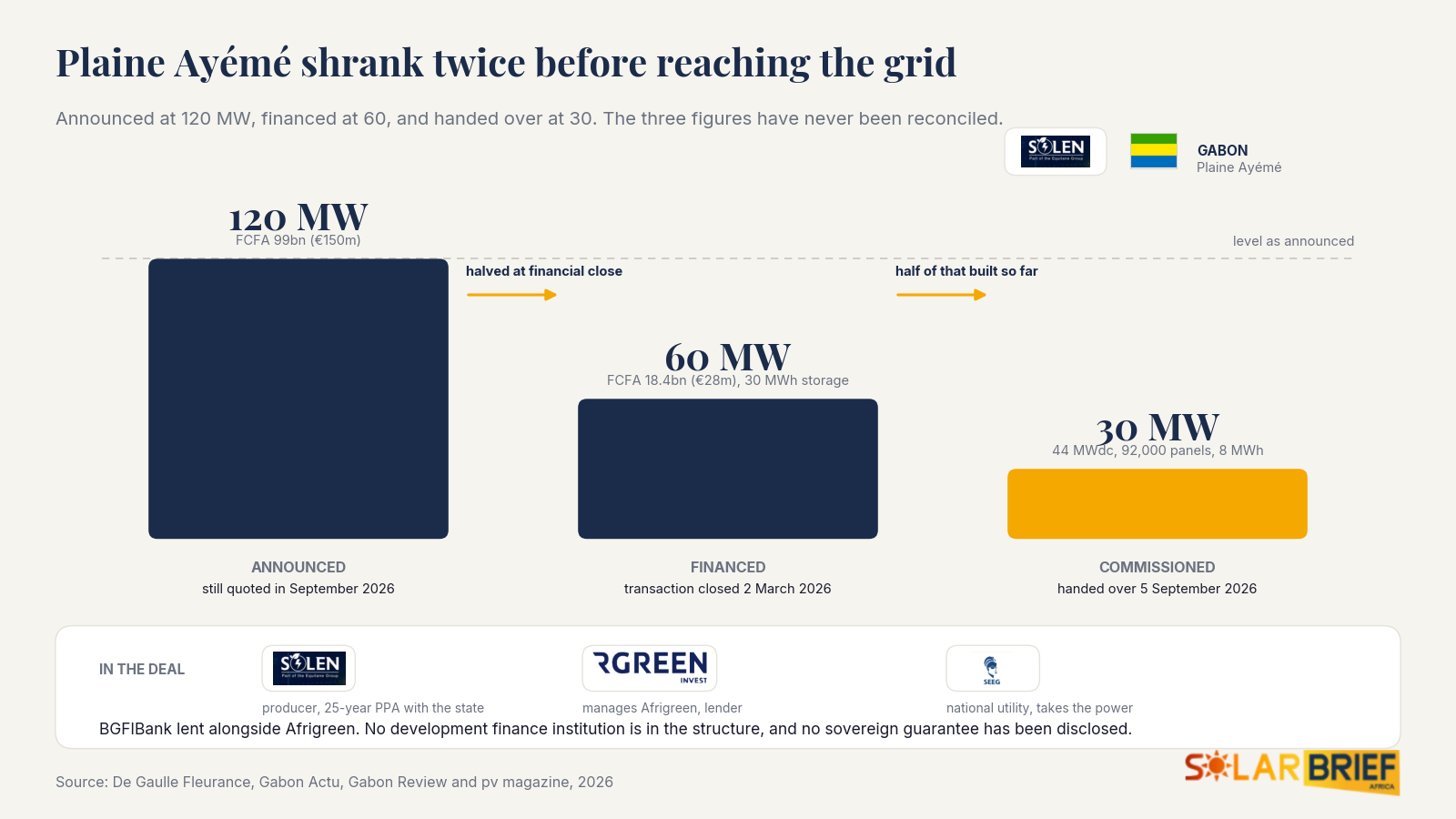
Gabon handed over the first phase of the Plaine Ayémé solar plant on 5 September, the country’s first utility-scale solar project. The capacity commissioned is 30 MWac. The capacity the state is still announcing is 120 MW. The financing that closed in March covers 60 MW.
What actually came online
Phase one carries 92,000 panels for 30 MWac, or 44 MWdc, with 8 MWh of battery storage, on a site more than 30 km from Libreville and connected by a new 90 kV line to the Ntoum 2 substation. Solen puts the output at around 45,000 households. Hermann Immongault, vice-president of the government, received the plant, and Philippe Tonangoye, the minister responsible for access to water, said it would significantly raise available production capacity around Libreville. Construction began in August 2022 against an original delivery date of July 2023.
The announced project and the financed project are different sizes
Coverage of the handover repeated a 120 MW build-out costing FCFA 99bn (€150m). The transaction that reached close on 2 March 2026 describes something smaller: 60 MW of solar with 30 MWh of storage across two phases, funded with FCFA 18.4bn (€28m). The two have not been publicly reconciled. The financing was restructured and the scope was cut, and the 120 MW figure stayed in circulation anyway.
Who is carrying the risk
Solen SA is a Gabonese producer owned by the Equitane group of Dubai, holding a 25-year power purchase agreement (PPA) with the Gabonese state, with SEEG, the national water and electricity utility, taking the power. The lenders are the Afrigreen Debt Impact Fund and BGFIBank. No development finance institution appears in the structure and no sovereign guarantee has been disclosed, which is rare for a first-of-its-kind plant and explains a good deal about why the project only moved once its scope matched what two commercial lenders would fund.
What it means
For a ministry preparing its next generation tender, the distance between 120 MW and 60 MW is the part worth sitting with. The project did not shrink because the resource underperformed or the technology failed. It shrank to the size two commercial lenders would fund without a sovereign guarantee, and only then did it get built. Four years passed between breaking ground and a quarter of the original nameplate reaching the grid. A government that keeps quoting the pre-restructuring figure is signalling to the next set of lenders that its announced pipeline and its bankable pipeline are not the same list, and that gap gets priced into the next deal. The more useful number to publish is the one in the financing documents.
Sources: Degaullefeleurance, Gabonactu, PV-Magazine