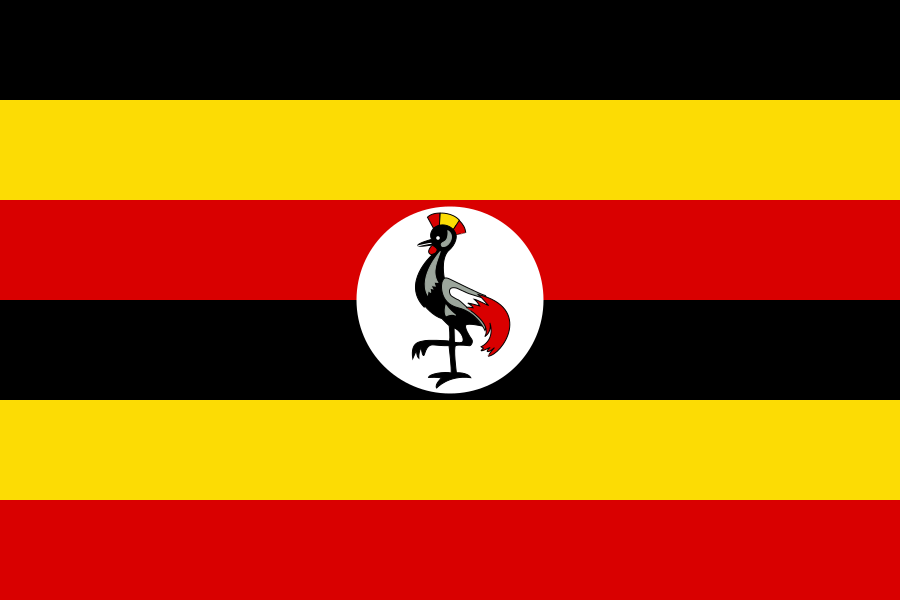
 Ouganda
 Zambie
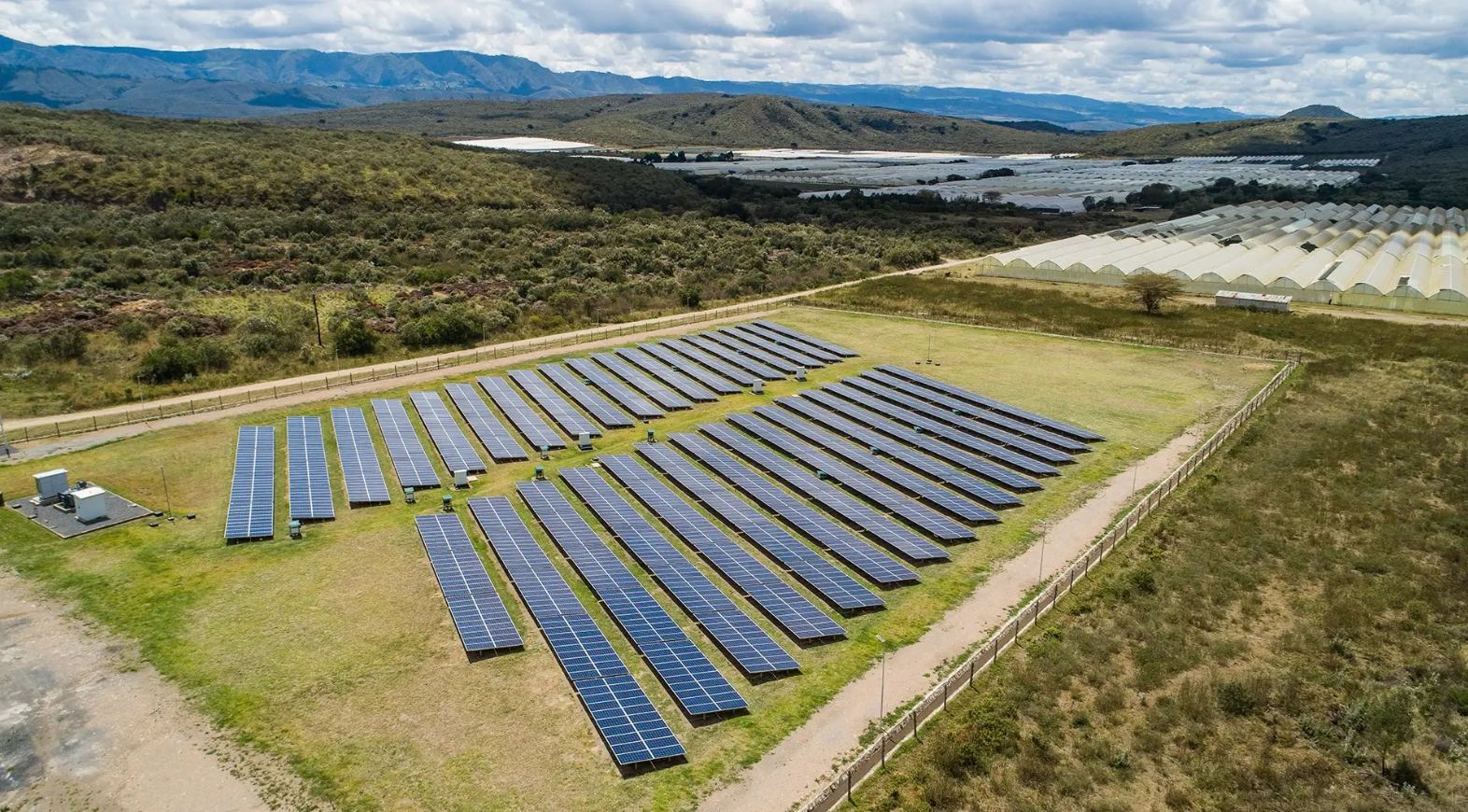
Solarise Africa has won a €1m grant from EEP Africa to enter Uganda and Zambia.
What the grant buys
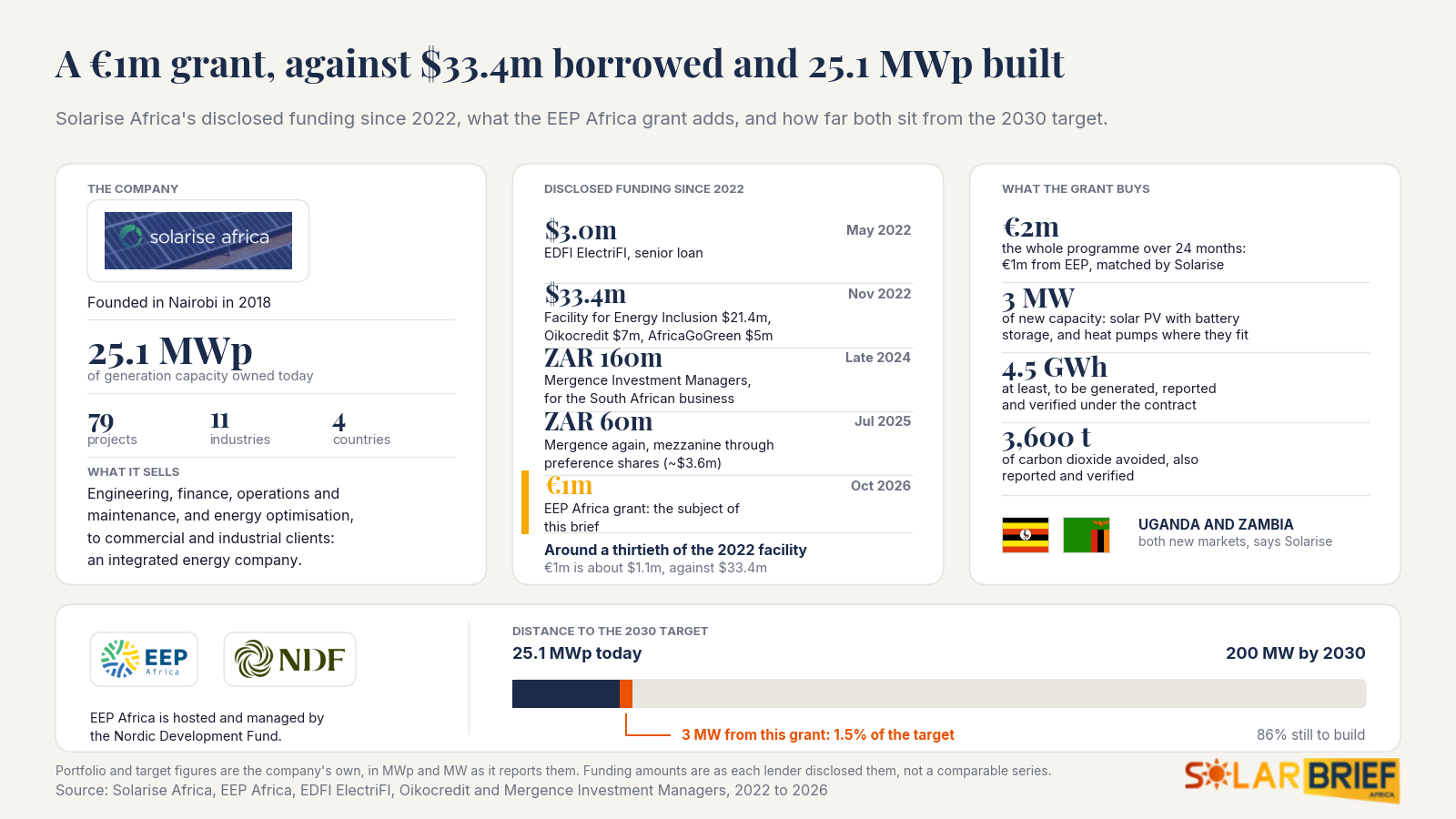
Announced on 13 October, the €1m is matched euro for euro by Solarise, making a €2m programme over 24 months. It funds 3 MW of new capacity: solar photovoltaic (PV) with battery storage and heat pumps where they fit. The contract attaches milestones, at least 4.5 GWh of generation and 3,600 tonnes of avoided carbon dioxide, both reported and verified. Solarise describes Uganda and Zambia as new markets.
Who Solarise Africa is
Founded in Nairobi in 2018 for businesses that wanted solar but could not finance it, Solarise began as a financier and now calls itself an integrated energy company, selling engineering, finance, operations and maintenance, and energy optimisation to commercial and industrial customers. Its portfolio runs to 25.1 MWp across 79 projects, 11 industries and four countries.
Why the smallest cheque matters most
Solarise is aiming at 200 MW across Africa by 2030. The 3 MW this grant funds is around 1.5% of that, and roughly an eighth of what the company already owns, so the money is not buying capacity. It is buying the two years in which Solarise finds out whether Ugandan and Zambian businesses pay on time, in markets where it has no payment history to price from. Zambia gives it a reason to try: the IMF put the country’s 2025 supply shortfall at around 707 MW on a largely hydro system.
What it means
For a fund weighing commercial and industrial solar in a country nobody has a book in, the structure matters more than the sum. EEP is not buying 3 MW. It is covering half the cost of an experiment, and Solarise is covering the other half and keeping whatever it learns. If the repayment data comes back clean, the company borrows against it commercially and never needs a grant in those markets again. If it does not, a donor absorbed the cost of finding out instead of a lender. That is the entire case for catalytic capital, and it makes the reporting milestones the thing to watch, because verified performance data from two untested markets is worth more to the next investor than three megawatts are. Sakkie van Wijk, the co-founder running operations, set the test himself: operations that keep deploying “well beyond the grant period”.
Sources: Solarise Africa, Ecofin Agency, AEP