 Sénégal
What Tamba Solar is
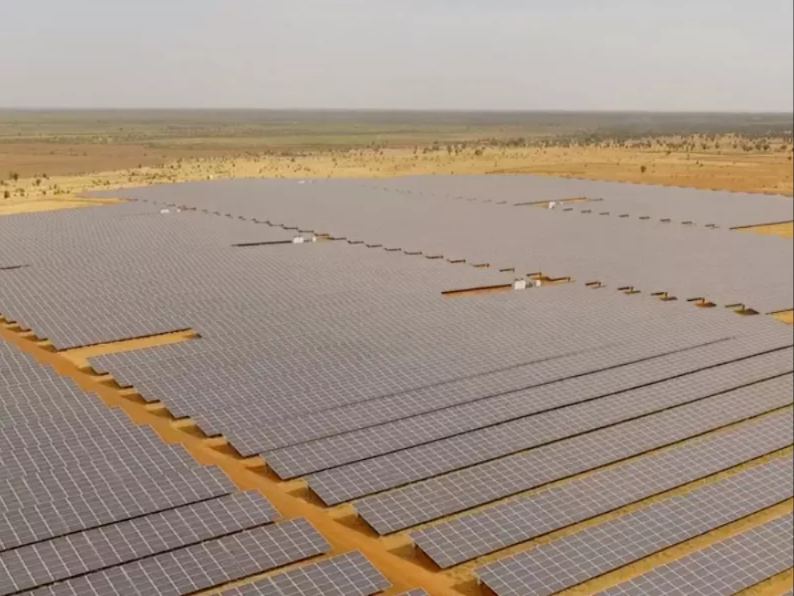
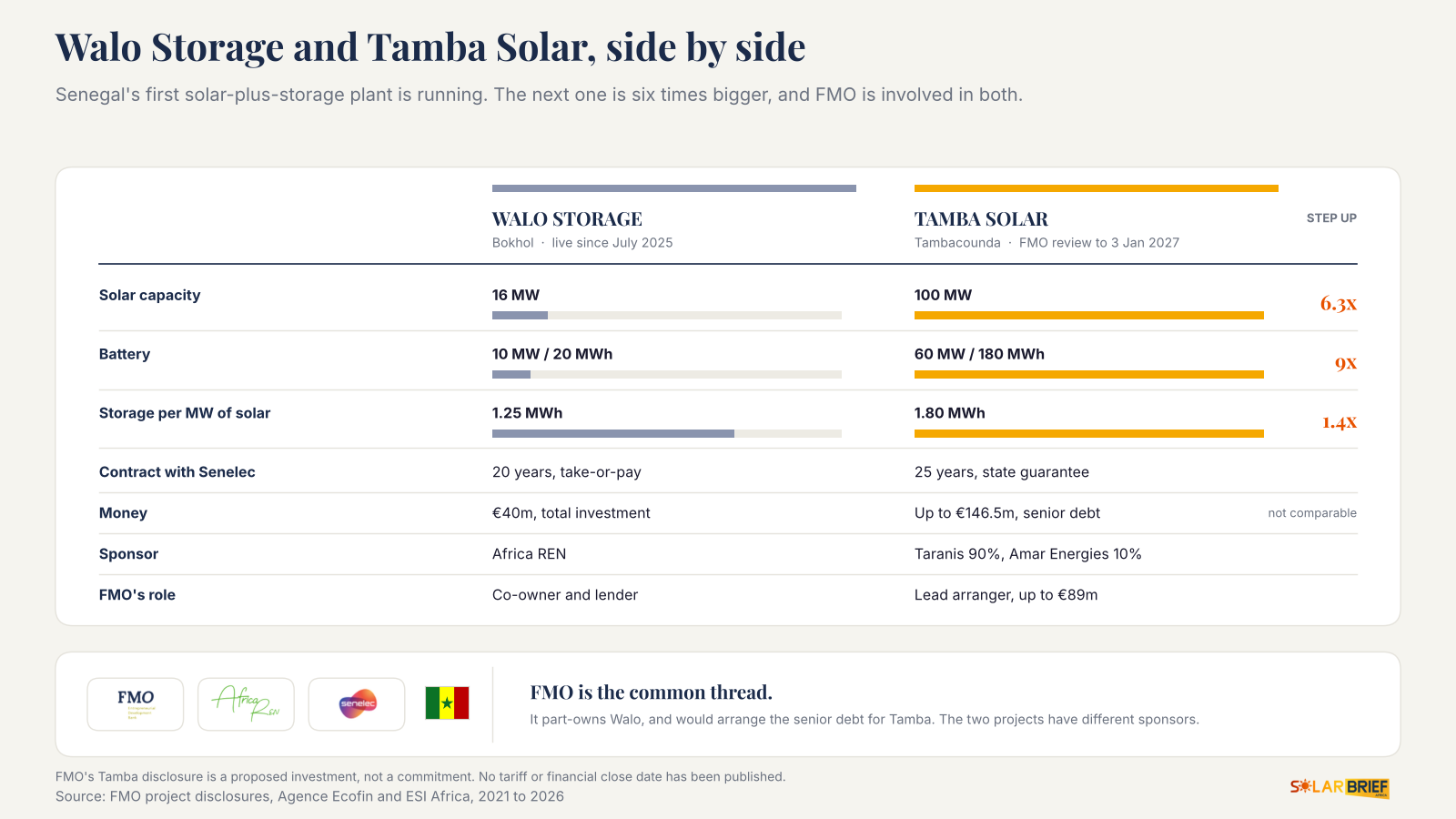
Tamba Solar SAS is a 100 MWp solar plant with a 60 MW, 180 MWh battery planned for the Tambacounda region of eastern Senegal. Taranis holds 90% through Taranis Holdco Senegal SAS, with the Senegalese firm Amar Energies on 10%. It signed a 25-year power purchase agreement with Senelec in December 2024, backed by a state guarantee. The sponsors are seeking up to €146.5m, about $164m, of senior debt. No tariff, construction start or financial close date has been published.
Who is FMO?
FMO is the Dutch entrepreneurial development bank, which lends to and invests in private companies in emerging markets. It is already inside this market rather than arriving at it. In 2021 it co-invested alongside Metier Sustainable Capital International Fund II to take control of Africa REN’s asset company, whose holdings include about 90% of Walo Storage, and it lent to that project alongside the Emerging Africa and Asia Infrastructure Fund.
What role do they play?
On Tamba, FMO would be mandated lead arranger, putting up to €89m from its own balance sheet and bringing other development finance institutions in for the remaining €57.5m, which the disclosure does not break down. Its project page is dated 4 November and open to public comment until 3 January 2027, and FMO states plainly that this is a proposed investment and not a commitment. The case for it rests on Walo Storage, which went live at Bokhol in July 2025 after about twelve months of construction: 16 MW of solar, a 10 MW and 20 MWh battery, €40m all in, on a 20-year take-or-pay contract with Senelec.
What it means
For a lender the useful signal is that FMO has changed position rather than repeated itself. On Walo it took equity and then lent into a project it part-owned, which is how a first-of-a-kind usually gets built. On Tamba it would be arranging senior debt for somebody else’s project, at six times the scale, behind a state-guaranteed 25-year offtake. That is the step that suggests the structure is now considered bankable on its own terms rather than needing a development bank on the share register. The number still missing is the tariff, and until the comment window closes on 3 January there is nothing committed to price against.
Sources: FMO, Agence Ecofin, ESI Africa