After nearly three years developing a project to rebuild a photovoltaic supply chain in France, Carbon collapsed - not on an unsolvable economic equation (we had investors, customers and the building permit), but on an anaesthetised political will. Originally, carried by the wave of optimism around the Green New Deal, Europe, in a surge of pride, gave itself a plan to keep a hand on at least part of the value creation, the jobs and the know-how of the PV industry. This simple idea, captured in the French saying "don't put all your eggs in one basket", was meant to secure alternatives to those coming from the Middle Kingdom, and why not manufacture them in Europe.
Less than half a decade later, governments no longer back the idea, and are sacrificing sovereignty on the altar of an outsourced energy transition. Is the same story now repeating itself on the African continent? I care deeply about shedding light for decision-makers, drawing on my own experience.
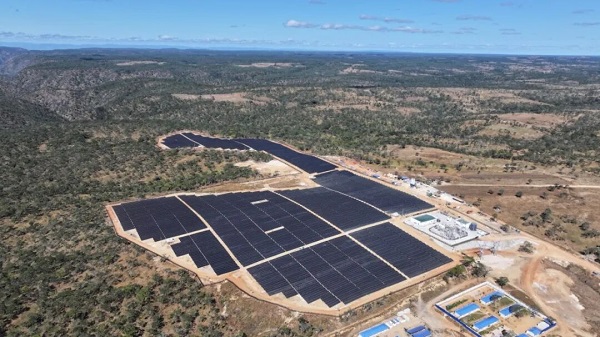
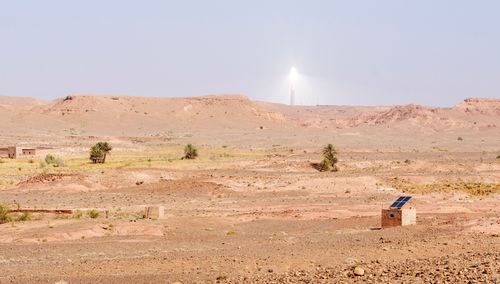
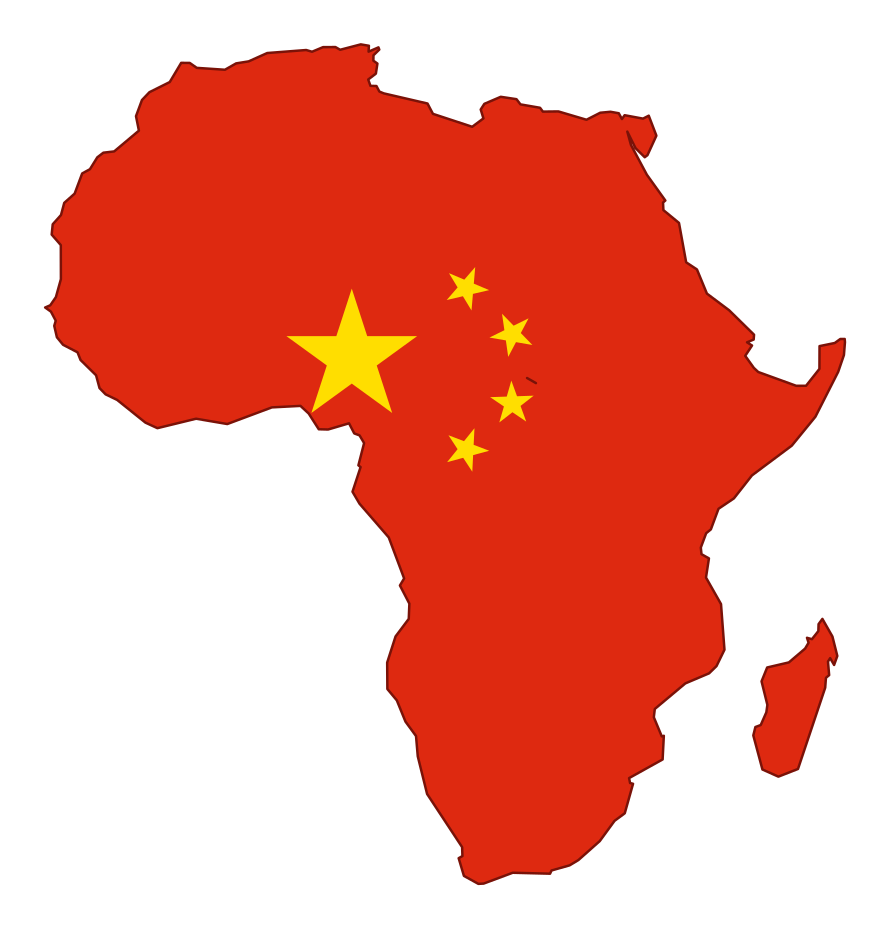
The observation is clear. In Africa, solar projects increasingly speak Chinese. In Senegal, Senelec has just signed with Huawei for two 50 MW plants each (in Linguère and Koungheul) with storage, extending an already well-established cooperation dubbed the "Technological New Deal". In Zambia, Tanzania and South Africa, it is PowerChina that builds and connects; in Egypt, China Energy is erecting a 560 MW solar-plus-storage gigacomplex. As for modules: Africa imported 18.8 GW of Chinese panels in 2025, up nearly 50% on 2024.
The reasons for this breakthrough lie in i) modules that are unbeatable on price; ii) an "EPC+F" model, which bundles financing into the construction contract, thereby removing the number-one obstacle in African markets: access to capital; iii) promises kept on deadlines - in Zambia, the PowerChina site was delivered 26 days ahead of schedule. Today, decision-makers cannot turn down these offers, because what is at stake is the electrification of countries and economies. It must be acknowledged: without Chinese industry, millions of Africans would perhaps still be waiting for the light, or paying more for it.
I look at African projects with a mix of hope and concern. The concern is the one I have already mentioned: that countries give in too easily to the sirens of the manufacturers. The hope, because the continent has a chance that Europeans no longer have: it is building its demand now. I urge decision-makers to become aware of their bargaining power.
Concretely, that means refusing the mere role of customer. Every large contract should come with tangible counterparts: joint ventures with skills transfer, on-the-ground training of engineers and technicians with a quota of local workers. We should not forget that manufacturers face increasingly constrained markets (notably the USA and India), and that their domestic market is maturing, with growth rates markedly lower than in recent years. Africa offers them a way to keep expanding their sales. Let me be clear: I am not preaching autarky, nor confrontation; I am preaching a win-win relationship. A relationship built with China on the basis of a shared medium-to-long-term strategy. Shutting the door on Chinese equipment or EPC would be absurd, and above all unfair to the populations waiting for electricity. Sovereignty is not withdrawal; it is keeping a hand on the wheel. Buy Chinese, yes - but within the limits that preserve an autonomous decision-making capacity, and in exchange for a share of the added value and know-how that must remain on African soil.
The first gigafactories now emerging - LFP batteries in Morocco, panel components in Egypt, a "Nigeria-first" local-manufacturing agenda - point the way, even if they remain modest against the volumes imported. The caution flagged by AFSIA, which notes that not all deals announced by Chinese players actually close, is in fact good news: it proves there is still room to negotiate.
Some will say the absolute priority is the cheapest, fastest kilowatt-hour, and that sovereignty considerations are a rich country's luxury. The argument deserves to be heard. But I have heard it, word for word, in Europe, and the hopes of reindustrialisation are now vanishing. We chose the short term; and our dependence on fossil fuels is gradually becoming a dependence on technologies in Beijing's hands.
Africa, for its part, still has the choice we no longer have. Let it buy Chinese if that is the most efficient - but let it negotiate every contract as if its industrial independence depended on it. Because, as I can testify, that is exactly the case.
(*) Carbon was a French gigafactory project (5 GW vertically integrated) born in 2023 and shut down in 2026, for lack of political support for the sovereignty of a PV supply chain in Europe.