 Zambie
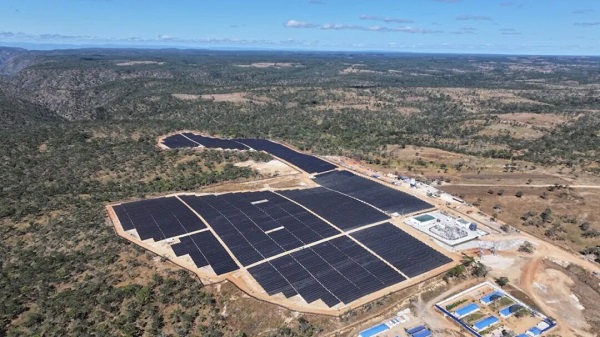
PowerChina has handed over the Lunsemfwa solar plant (27 MWp / 20 MWac) in Zambia's Central Province, grid-connected 26 days ahead of schedule. At 27 MWp the project is modest. What it signals is not.
A modest base, an outsized pipeline
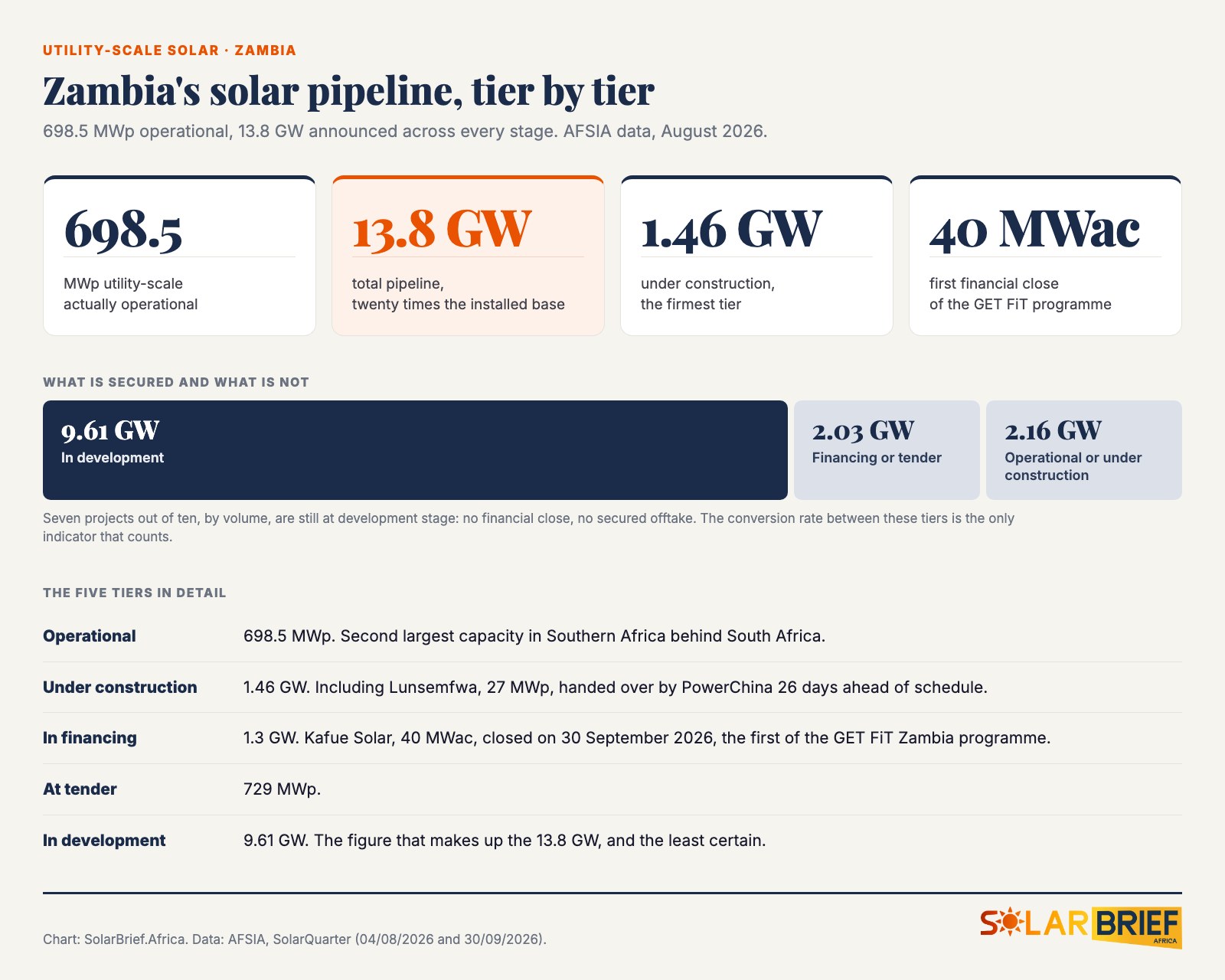
On AFSIA-tracked data, Zambia has 698.5 MWp of operational utility-scale solar, already second in Southern Africa.
The real story sits behind it. Some 1.46 GW is under construction and 1.3 GW in financing, enough to take operational capacity beyond 3.46 GW once delivered, more than four times today's base. Further out, 729 MWp are at tender stage and 9.61 GW still in development.
Those five tiers add up to the 13.8 GW headline figure. It is a number to handle with care: a project in development is not a financed project, and the conversion rate between tiers is the only indicator that really counts.
Six weeks on, the pipeline is converting
It is precisely on that conversion rate that the following weeks have begun to answer.
On 30 September, Globeleq's 40 MWac Kafue Solar project reached financial close. It is the first project to get there under the GET FiT Zambia programme, with KfW and Standard Chartered among the financiers and ZESCO as offtaker. Modest in volume, decisive as a signal: a programme that produces its first close stops being an intention.
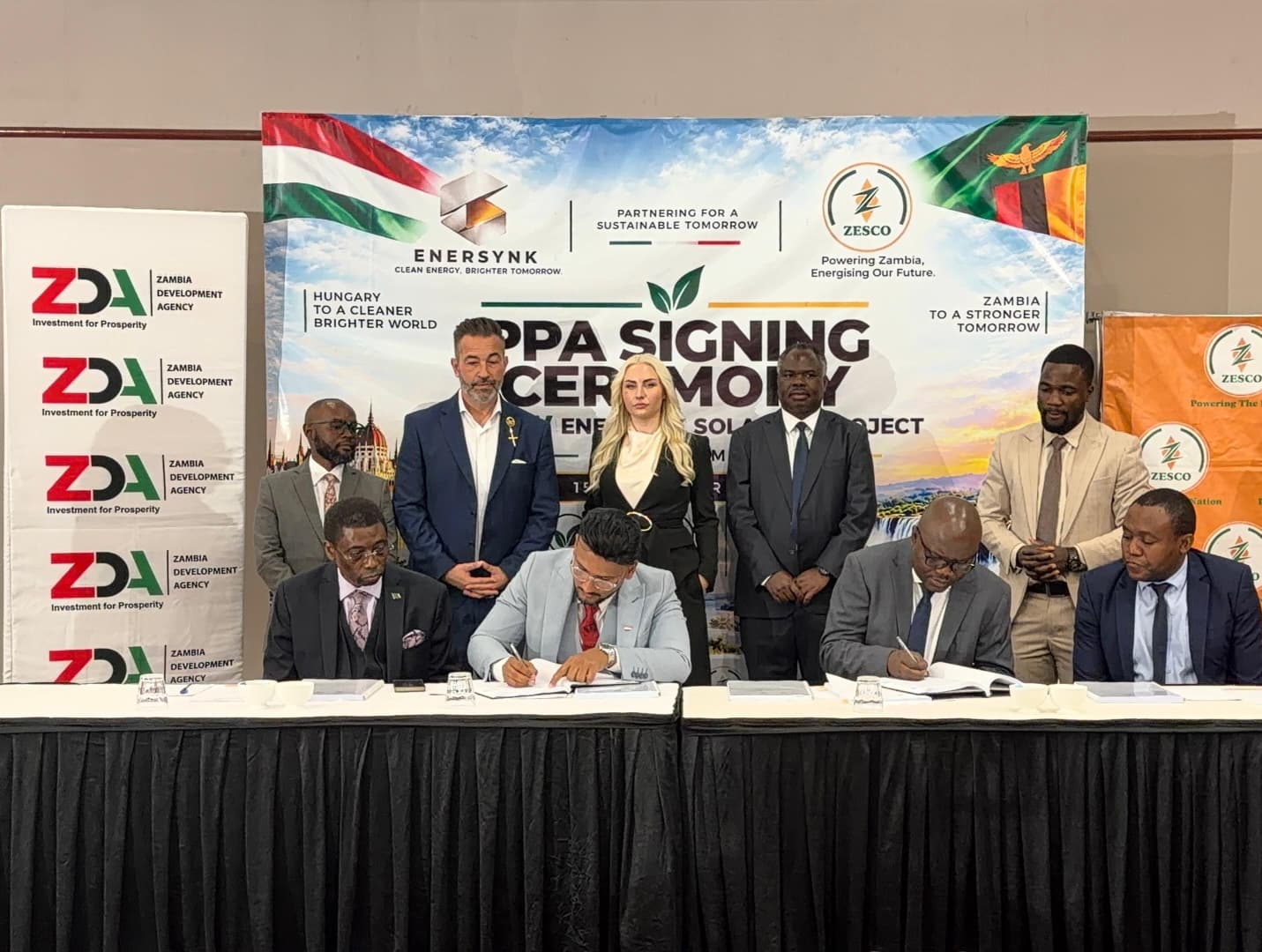
Over the same period, ZESCO signed 1 GW of power purchase agreements in three months, split between a Hungarian and a South Korean independent producer at 500 MW each. Together they cover, on paper, a third of the national 2030 solar target. Two of those developers have yet to reach financial close, which brings the conversion rate back into focus.
The movement is not confined to the grid. On 23 September, Acumen invested USD 5 million in Sun King Zambia, a week after ZESCO's second signature. The country is now drawing capital on both segments, utility-scale and off-grid.
Pairing solar with hydro
Lunsemfwa's hydro-solar design points to a market maturing technically, not only in volume.
Zambia has a substantial hydro base, and developers are looking to pair solar with it. The logic cuts two ways: solar generates through the day as demand climbs, while hydro keeps its reserve for the evening. In a country whose hydro output is exposed to rainfall, adding solar amounts to saving water behind the dams.
What it changes for the industry
Such a trajectory would place Zambia among the most dynamic utility-scale markets on the continent, narrowing the historic gap with the regional leader South Africa, where tariff reform is opening the door to private competition.
Above all it confirms that African solar is no longer one country's business: five markets have joined South Africa above a gigawatt a year.
For developers and financiers, the depth of the pipeline points to sustained demand for EPC, equipment and financing. Zambian deals are tracked as they are announced in our Deal Tracker.
FAQ
698.5 MWp of utility-scale solar on AFSIA-tracked data, which puts the country second in Southern Africa. The 13.8 GW often quoted is the total pipeline across every stage, not installed capacity.
A support programme for renewable project development, backed notably by Germany and the United Kingdom. Globeleq's 40 MWac Kafue Solar was its first financial close, on 30 September 2026.
The 1.46 GW under construction and the 1.3 GW in financing are the firmest tiers. The 9.61 GW in development remain indicative: a project at that stage has neither financing nor a secured offtake contract.
What it means
For developers and financiers, Zambia is emerging as one of the most active utility-scale markets in Southern Africa after South Africa. But the number to watch is not the 13.8 GW headline, it is the conversion rate: seven tenths of that volume is still at development stage. The GET FiT programme's first financial close, at the end of September, is a more meaningful signal than the announcement of another gigawatt.
Sources: SolarQuarter (04/08/2026), SolarQuarter (30/09/2026), données AFSIA