 Togo
How much?
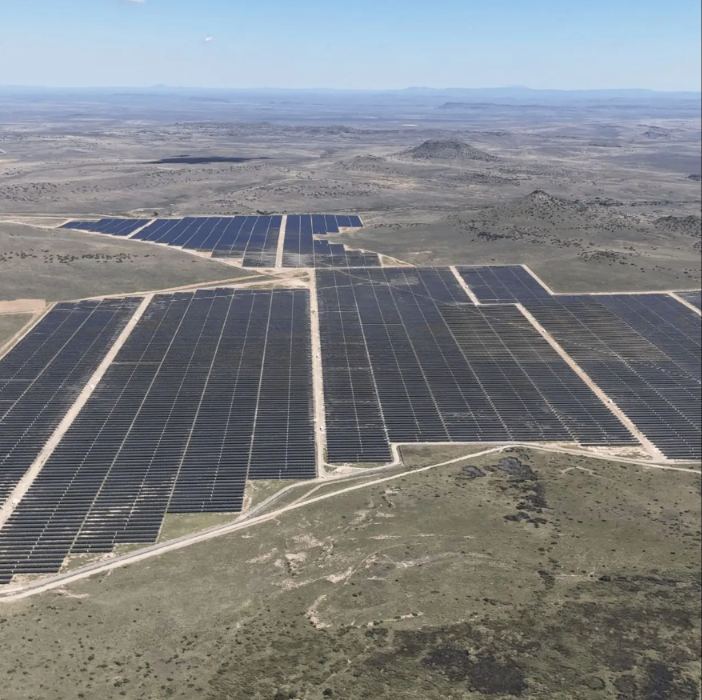
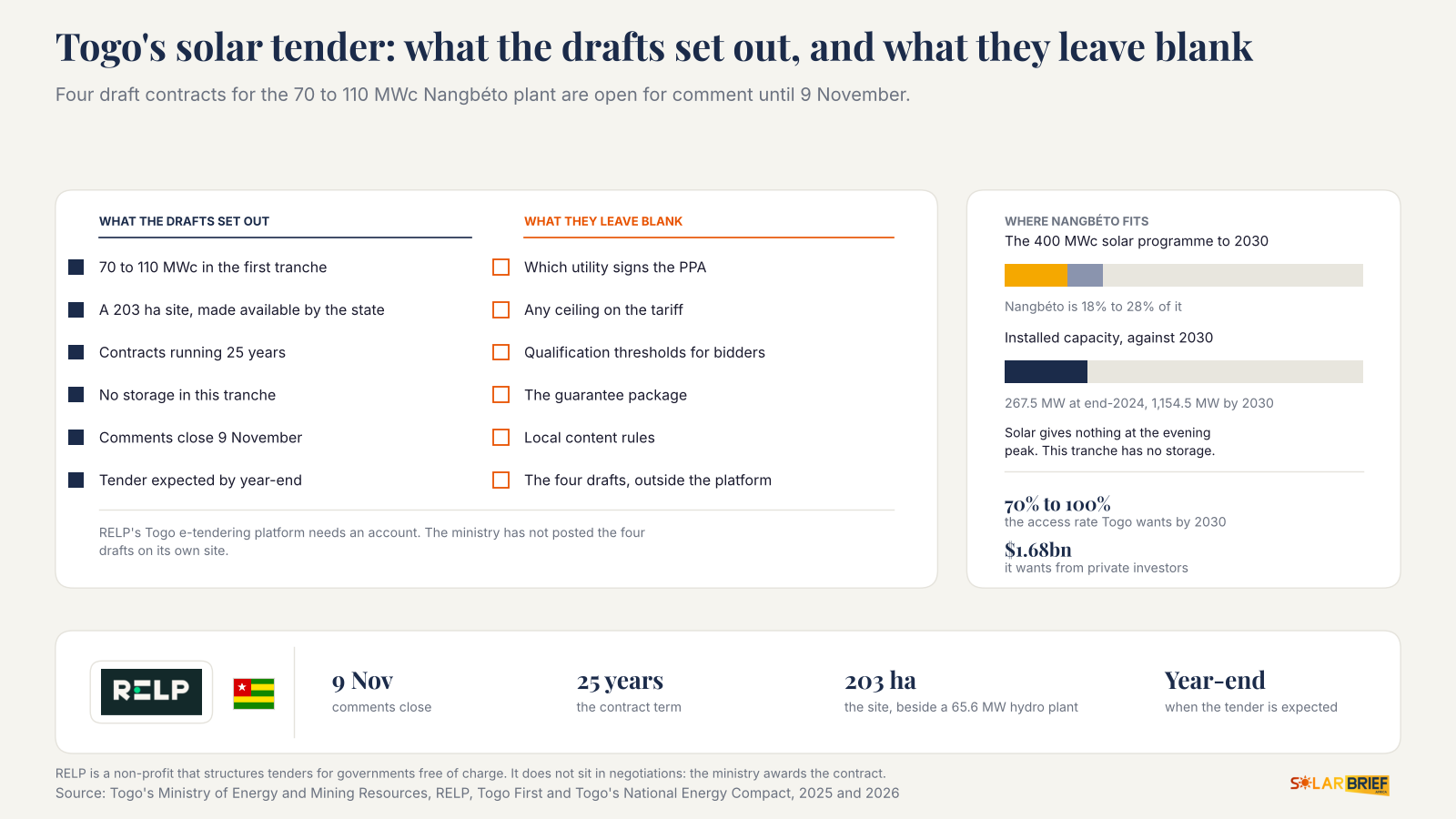
Nangbéto is the first tranche of Togo’s 400 MWc solar programme: between 70 and 110 MWc on a 203-hectare state site about 200 km northeast of Lomé, beside the 65.6 MW Nangbéto hydro plant run by the binational Communauté Électrique du Bénin. The concession and the power purchase agreement both run 25 years. The ministry has not published a tariff ceiling, qualification thresholds, local content rules or the guarantee package, and it has not named which utility will sign the PPA. There is no storage in this tranche.
When?
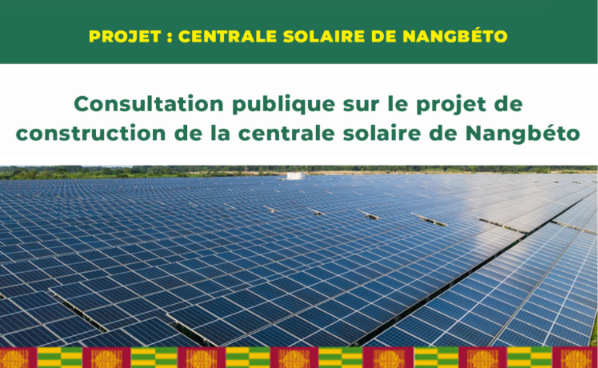
Four draft documents were made available for comment: the concession agreement, the PPA, the tender dossier and a technical requirements annex. The consultation deadline was 9 November, with submissions handled through RELP’s Togo e-tendering platform, which requires an account. The ministry had not posted the drafts on its own website.
The competitive tender is expected before the end of the year. Bocar Ba’s point in October was that guarantees are built into the design of a tender rather than bolted on afterwards. The consultation therefore gave developers and lenders an opportunity to raise concerns about risk allocation before the procurement process moves forward.
How does that fit into the electrification plan?
Togo’s National Energy Compact puts installed capacity at 267.5 MW at the end of 2024, including 70 MW of solar, and targets about 1,154.5 MW by 2030 alongside universal access, up from 70% in 2024. Reaching it needs roughly $3bn, of which more than $1.68bn is meant to come from private investors. Togo mobilised about $517m of private capital in the thirteen years to 2024. Bocar Ba told SolarBrief that Togo was RELP’s first African country and put the first phase at 60 to 120 MW without storage, with a request for information due that month. The range has narrowed and the consultation has taken the place of the RFI, but the shape is as she described it.
What it means
For a developer, the useful read is what the consultation left unsettled. The tariff ceiling, qualification thresholds and guarantee package are the three things that will determine whether a bid is worth preparing, and none of them was publicly specified in the available information. The consultation provided an opportunity for the market to raise these issues before the tender. RELP structures the documents, but the ministry awards the contract. Two gaps remain particularly important. The PPA counterparty is unnamed, and the site sits beside a plant operated by the binational CEB rather than Togo’s own utility. Developers will need clarity on which entity carries the offtake obligations. The National Energy Compact also records that solar contributes nothing to the 18:00 to 24:00 peak, a gap that a tranche without storage will not address.
Sources: PV-Magazine, World Bank