 Afrique du Sud
What is the deal?
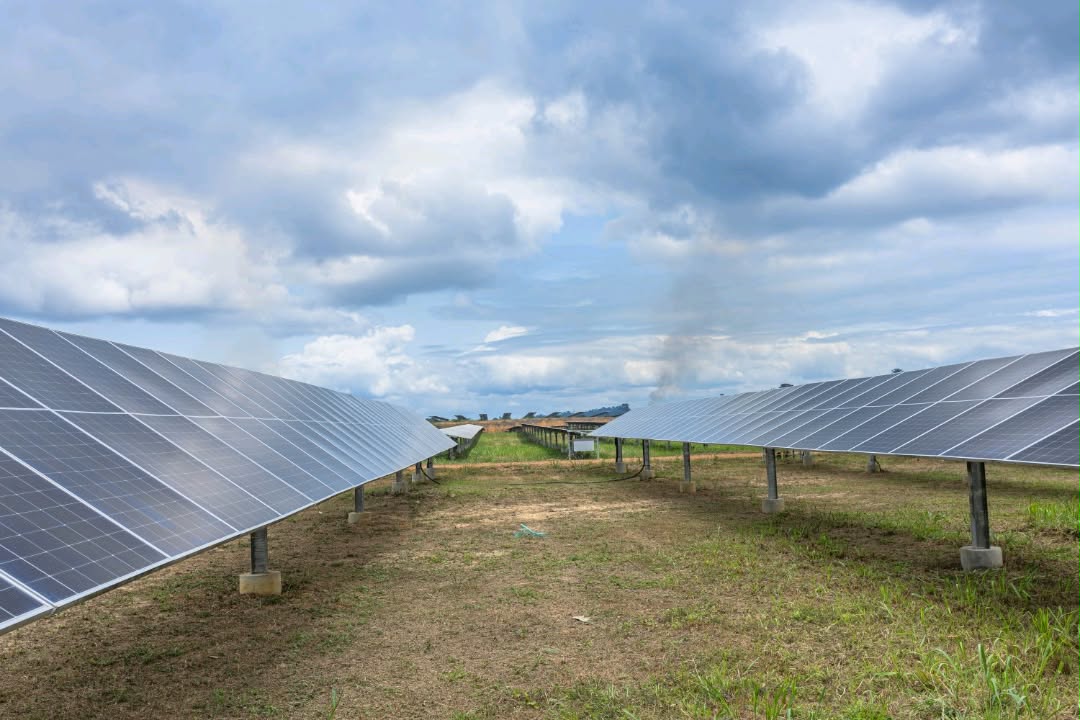
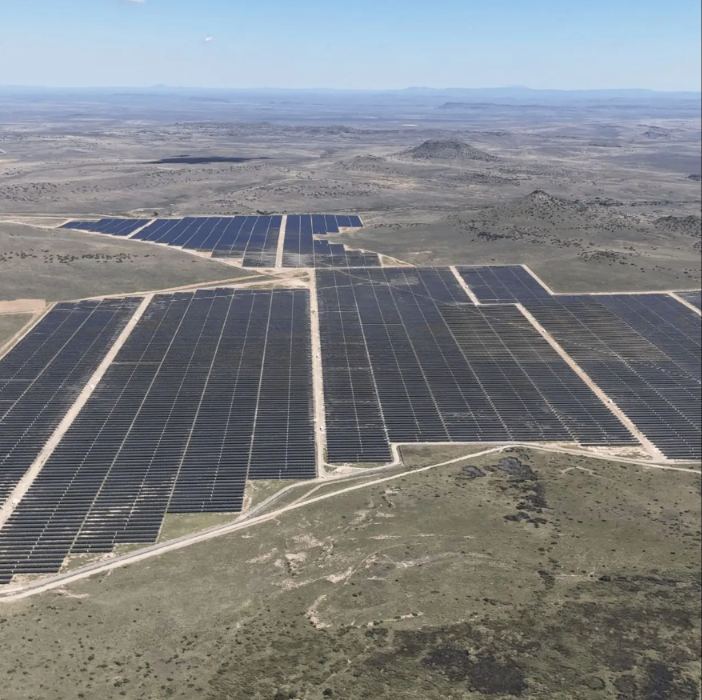
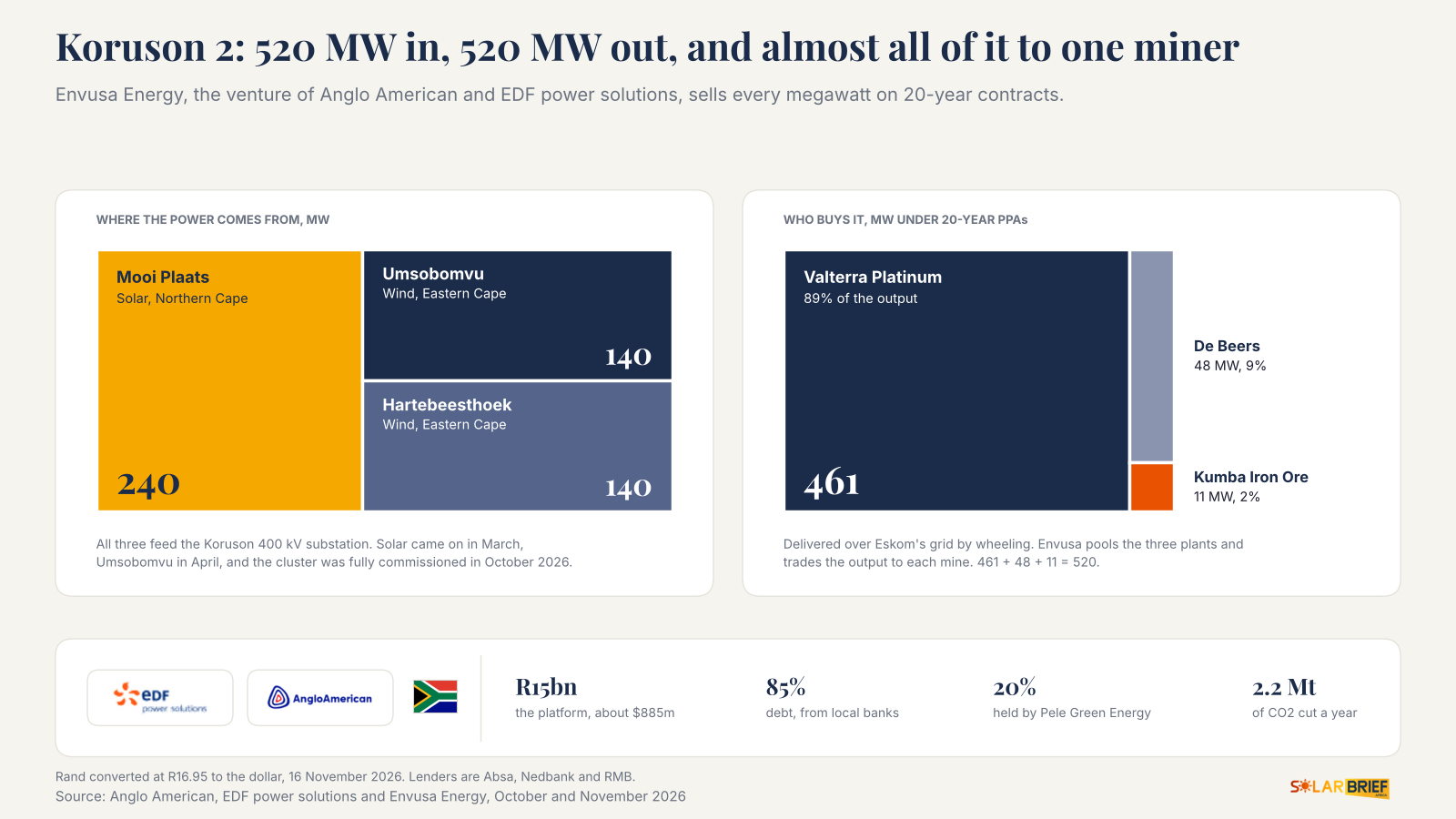
Envusa Energy, the joint venture Anglo American and EDF power solutions set up in 2022, has fully commissioned Koruson 2: the 240 MW Mooi Plaats solar park in the Northern Cape and the 140 MW Umsobomvu and Hartebeesthoek wind farms in the Eastern Cape. All three connect at the Koruson 400 kV main transmission substation. Anglo American describes it as a R15bn platform (about $885m), financed by Absa, Nedbank and RMB, with local banks providing 85% as debt. Pele Green Energy holds 20% of each project company, and a community trust shares in revenue over the 20-year life.
How do the mining companies benefit?
The output is sold under 20-year power purchase agreements: 461 MW to Valterra Platinum, the former Anglo American Platinum, 48 MW to De Beers and 11 MW to Kumba Iron Ore. None of the mines sits beside the plants. Envusa has held an electricity trading licence since 2023 and uses what Anglo American calls a portfolio wheeling model, pooling wind and solar from dispersed sites and delivering it through Eskom’s national grid. The buyers’ stated aims are lower electricity costs and lower emissions, with the cluster expected to cut about 2.2 million tonnes of CO2 a year. No tariff or saving has been published.
Why did EDF get involved?
EDF has been in South Africa since 2009 and expects to have 1.5 GW operating there in 2027 across wind, solar and batteries. Koruson 2 plugs into the substation built for its own Koruson 1 cluster, so the two share grid infrastructure. Tristan de Drouas, the group’s vice president for southern Africa, presented the commissioning as proof of large-scale renewable corporate PPA projects, a market where private demand, not state tenders, drives new capacity. Envusa’s stated ambition is 3 to 5 GW by 2030.
What it means
For an industrial energy buyer, the lesson is in the structure, not the megawatts. A mine no longer needs a plant at its gate: a licensed trader can pool generation hundreds of kilometres away and wheel it in on a 20-year contract. That contract was bankable enough for three South African commercial banks to carry 85% of the cost as debt, with no development bank in sight. The caution is concentration, since 89% of the output rests on a single platinum producer, and the price those buyers pay remains undisclosed.
Sources: Envusa Energy, Solar Quarter