 Kenya
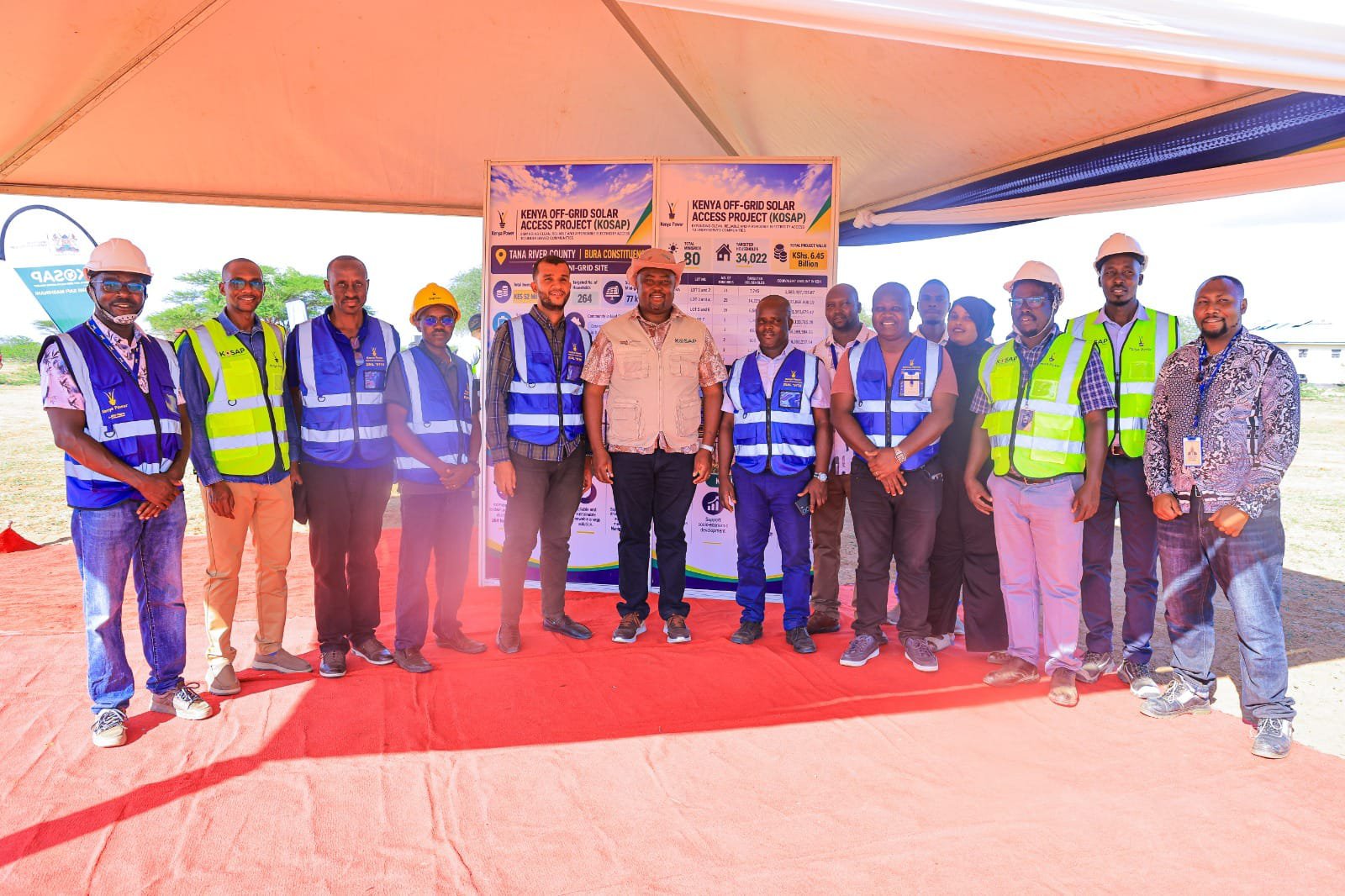
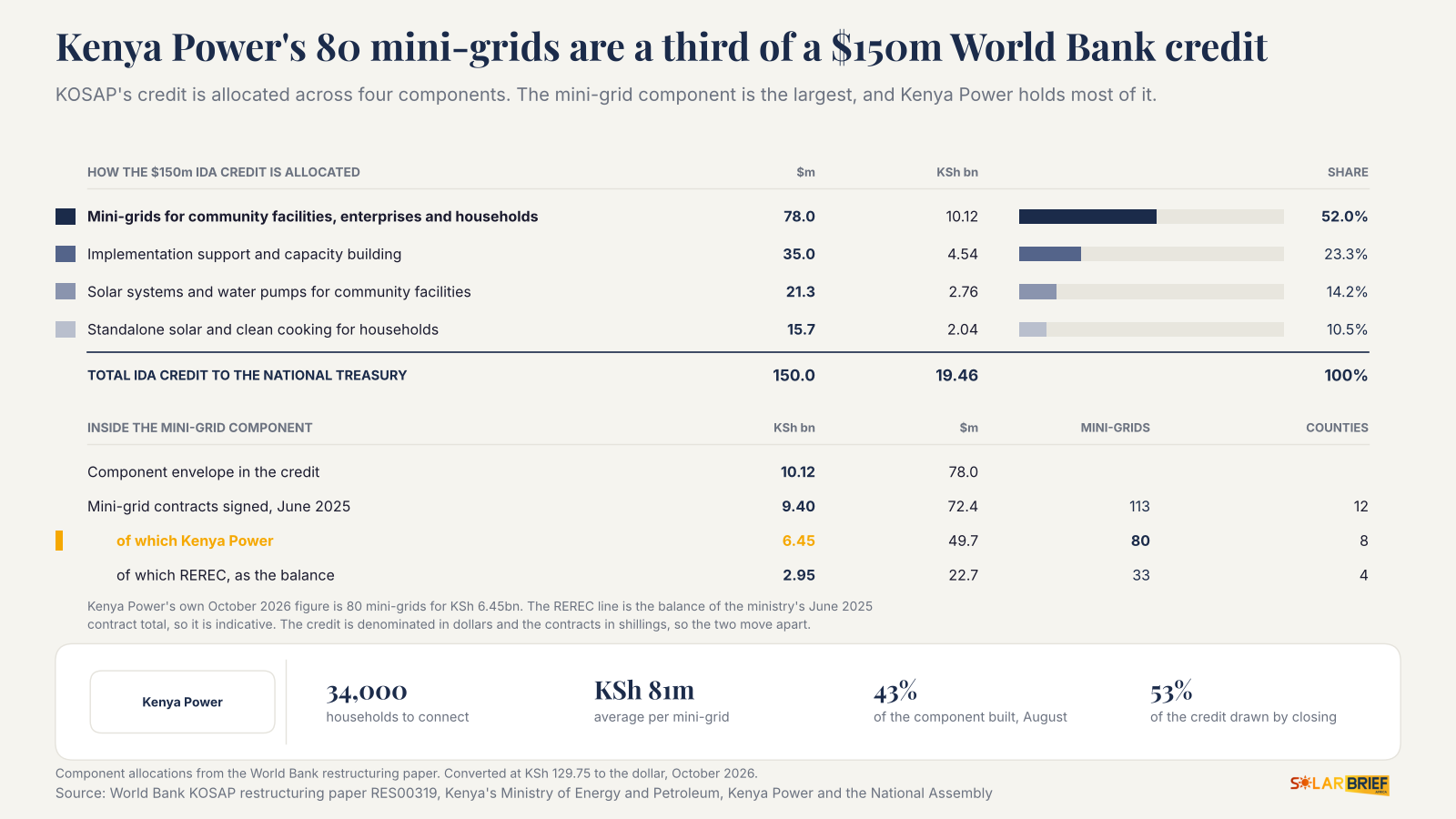
Kenya Power is building 80 solar mini-grids worth KSh 6.45bn ($49.7m) across eight counties, to reach 34,000 households. The money is borrowed, the tariff will be the national one, and the programme is already past the deadline it was given.
Where the programme stands
KOSAP began in 2017 with an original closing date of June 2023, extended twice since to September 2026. In August the National Assembly’s energy committee was told the mini-grid component was 43% complete physically and 24% financially, and the Auditor-General expects only about 53% of the credit to be drawn by the closing date. The energy ministry has requested a further twelve months and KSh 18bn to settle outstanding contractor payments. REREC attributes the delays to procurement review cycles, shipping times on equipment from China, and terrain in counties such as Marsabit and Turkana.
What it means
For a contractor weighing a KOSAP lot, the technical scope is not the risk. Eighty plants of roughly KSh 81m ($621,000) each, in Mandera, Wajir and Garissa, is routine work for anyone already building in arid counties. The risk sits in the payment chain. The energy ministry told Parliament in August that it needed another KSh 18bn to clear backlogs and settle pending invoices, and that some lots had recorded completion rates as low as zero. It also said it had chosen to revive underperforming contractors rather than terminate them, on the grounds that cancellation would cause further delay. That decision tells a bidder two things. Non-performance on this programme has not been punished with termination, which lowers the bar for the competition. And the client's own account of its finances is that it is behind on paying the contractors it already has. Price the working capital, not the panels.
Sources: Kenya Power statement via People Daily Digital, 4 October 2026, Kenya Power on X, 4 October 2026, World Bank, KOSAP restructuring paper RES00319, REREC, The Kenya Off-Grid Solar Access Project