 Sénégal
 Ghana
Ghana Togo
Togo Guinée
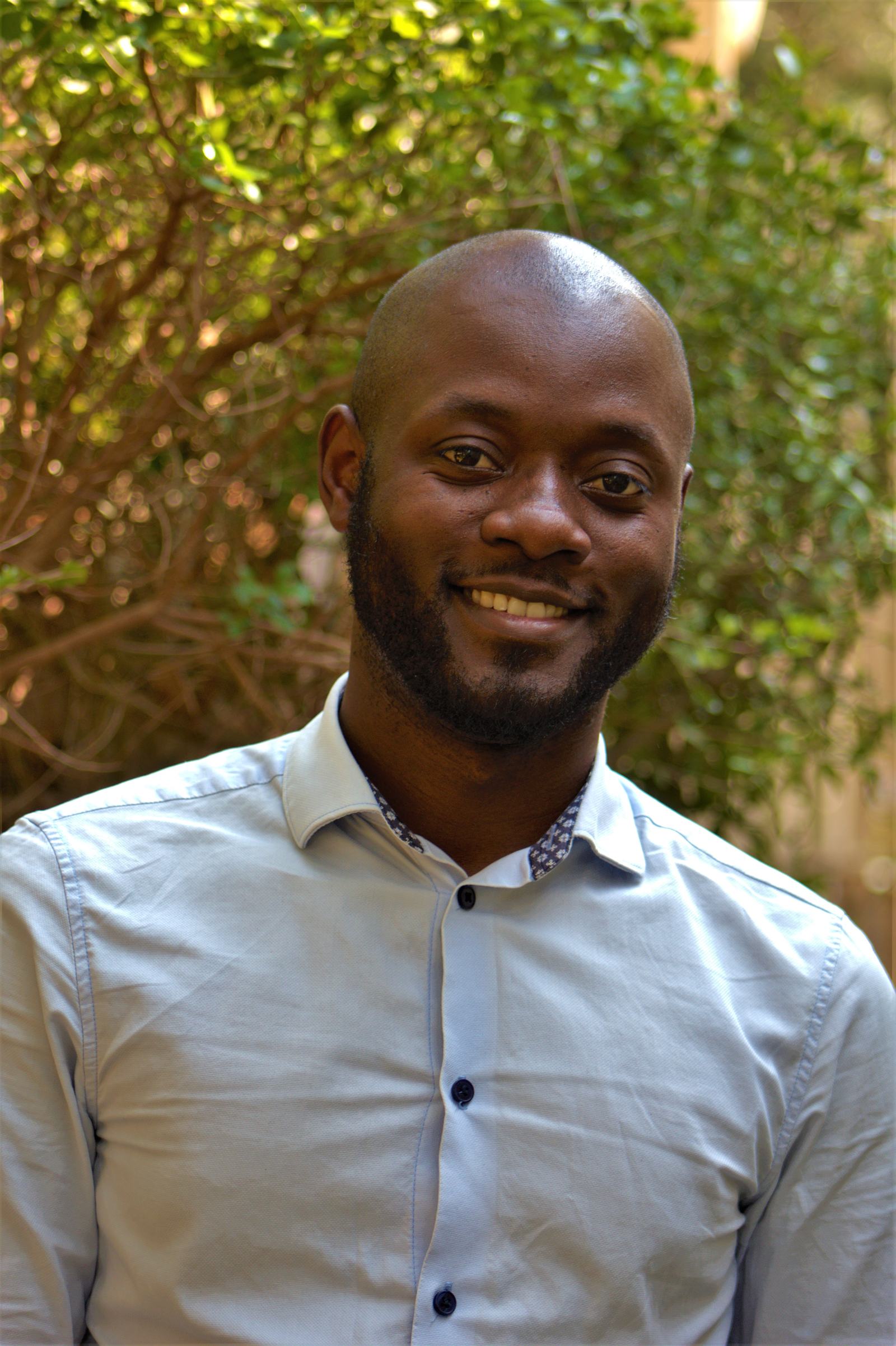
I’m Senegalese: I grew up between Senegal and Côte d’Ivoire, then finished secondary school in Lyon before moving to Canada. I ended up in engineering rather by chance, as I’d always dreamt of becoming a pilot for Air Afrique. It was my final-year project – on solar energy in Senegal – that made me want to devote myself to renewable energy. I then did a Master’s degree in energy and energy efficiency at ÉTS in Montreal, with a clear goal in mind: to return to Africa.
Back in Senegal, I worked with the NGO Enda Énergie on operational models for solar mini-grids. I helped install power stations and surveyed numerous rural households on pricing and productive uses. When you’re in the city, you tend to think of electricity as a right; in these remote areas, where children walk for kilometres to get to school or fetch water, you realise just how much it changes lives, particularly for women. This reinforced my belief in the importance of this sector for development.
At Power Africa, as lead adviser for Senegal, I gained a 360-degree overview: we supported the ministry, the regulatory body, the banks – which developed products for mini-grids and solar home systems – and businesses in securing grants and loans. We also enshrined the framework for mini-grids in the Electricity Code. At Engie, I was a business developer for West and Central Africa, with considerable freedom to develop decentralised projects. Engie returned to Africa with grand ambitions, but subsequently sold the majority of its assets. Finally, at the Tony Blair Institute, I worked as an adviser to Togo’s Minister for Energy as part of a programme funded by USAID through Power Africa: access to energy, capacity building, thermal and solar projects, and mobilising finance. My career path owes a great deal to what some call chance – even though, deep down, I don’t believe in it: I never applied for these roles. The doors opened in other ways.
I am Head of Engagement for Africa at RELP. What motivated me was a highly innovative model: RELP is a non-profit NGO that supports governments in structuring competitive tenders, on a pro bono basis, that is to say, free of charge. It was founded by former Argentine civil servants who launched the RenovAr programme in their country: 9.5 gigawatts of renewable energy and $11 billion in private investment secured. They wanted to replicate this model in countries of the Global South. This is South-South collaboration.
“We’re not just passing-through consultants: we’re truly embedded within the ministries”
Firstly, we are an implementation partner: funding is often in place, but projects are slow to get off the ground. Secondly, we are not just passing consultants: we are truly embedded within the ministries, with a task force set up by the government and a local RELP expert, who acts as our point of contact. We work hand in hand with the ministry’s teams, because the transfer of skills is essential. Together, we draft the tender documents and term sheets, with a timeframe of one to three years: running a series of successive tenders to drive down the tariff as much as possible. But the tariff is never an end in itself. It is a means to an end: more affordable and reliable electricity for households, schools and small businesses.
The process begins with a memorandum of understanding (MoU) and a terms of reference, which set out the scale of the programme and the experts to be made available. This is followed by a risk analysis, involving a workshop and questionnaires for investors and development finance institutions, then the structuring of the tender, a study of the grid’s capacity with the transmission system operator, and an economic analysis to determine the optimal capacity to commission at the lowest cost. RELP is not involved in any negotiations between the State and the private sector: the State makes the decisions, and the evaluation committee is its own, although we may provide support at its request. Once the successful bidders have been selected, the fare is announced and the private sector implements its project, with monitoring provided if the government requests it.
We are 100 per cent funded by philanthropists, with no funding from the private sector, to avoid any conflict of interest: all our funding is public and disclosed on our website.
Guarantees are indeed decisive: they determine bankability, and therefore the final tariff. This is precisely the raison d’être of the iTrust scheme promoted by RELP.
The idea is simple: rather than renegotiating bankability on a project-by-project basis, at great expense and with considerable delays, iTrust offers a ‘programme’ guarantee that covers projects awarded through public tender, provided they meet clear eligibility criteria. The guarantee is thus built in at an early stage, into the very design of the tender process, ensuring a balanced allocation of risks from the outset.
In practical terms, this reassures lenders, broadens the pool of local and international investors, and reduces the cost of financing – and therefore the rate ultimately paid by households and businesses. The fund is intended to be financed by donors, multilateral and bilateral agencies, and institutional investors, and to operate as a regional guarantee facility.
Our role in working with governments is twofold: to help them structure traditional guarantee mechanisms (buyer’s credit guarantees, state support, development bank instruments), and also to provide them with access to iTrust for the projects we oversee, always ensuring that the state retains decision-making authority and control.
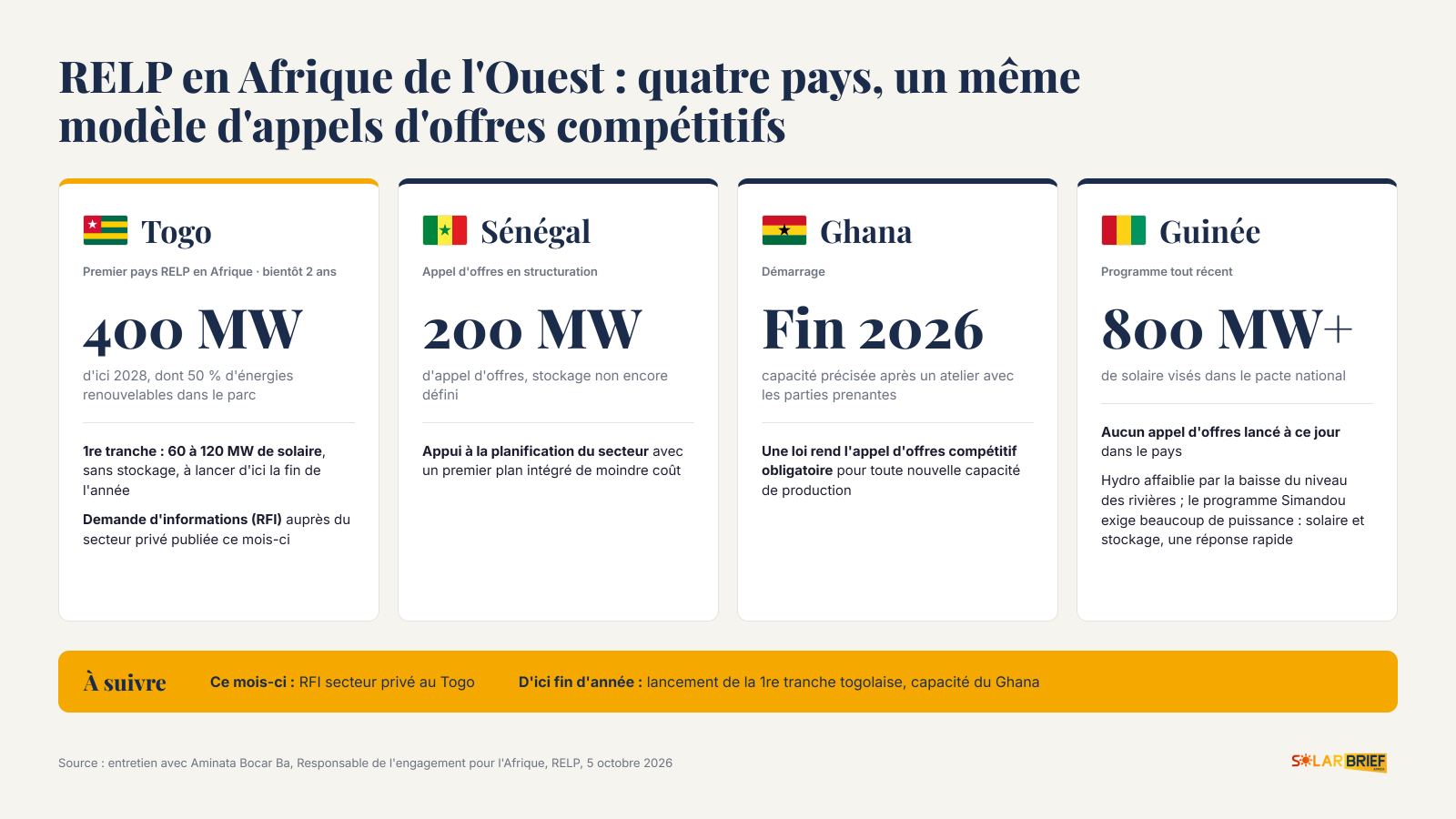
Togo was our first country in Africa, almost two years ago: the target is 400 MW by 2028, with 50 per cent of the energy mix coming from renewables. The first phase, comprising 60 to 120 MW of solar power without storage, is due to be launched by the end of the year, and a request for information (RFI) aimed at the private sector will be published this month.
In Senegal, we are supporting sector planning, with an initial low-cost integrated plan, and the **structuring of a 200 MW tender, for which storage has not yet been defined.*
Guinea is a very recent addition and presents an interesting case: the country has never launched a tender process and is targeting over 800 MW of solar power in its national energy plan. River levels have fallen due to climate change, reducing hydroelectric output. The Simandou programme, centred on iron ore mining, requires a huge amount of power: solar and storage could be a rapid way to meet this demand. All these countries demonstrate a growing interest in competitive and transparent tenders.
In Ghana, where we are just getting started, the capacity will be finalised by the end of the year following a workshop with stakeholders. The country deserves praise: it has passed a law making competitive tendering mandatory for all new generation capacity.
At present, a mini-grid is not viable without a subsidy: it requires a tariff that reflects costs, whereas the target households are among the least well-off and often have seasonal incomes. In Senegal, the tariff is regulated with a view to harmonising rates between rural and urban areas: ranging from 82 to 160 FCFA/kWh depending on the bracket; the same harmonised tariff applies to rural electrification concessionaires. The shortfall compared with actual costs is covered by the Special Fund for Support to the Energy Sector, which pays monthly compensation to the concessionaires, as the public authorities are committed to equal treatment.
But sustainability depends on more than just the tariff: demand must also be created. Lighting and mobile phone charging are not enough to cover the investment; productive uses and a whole ecosystem around them are also needed — for example, agriculture and its value chain.
Togo illustrates this point: its mini-grid programme has been restructured several times, as the tariffs proposed by the private sector were difficult for the targeted households to afford. The state has therefore often chosen to finance the construction and entrust the operation to the national electricity company or to local firms.
A concession financed entirely by the private sector looks attractive on paper. But it requires a robust regulatory framework, clear options for the investor when the main grid arrives (connection, relocation of assets, buy-out by the operator) and an operational compensation fund. All this takes time, even as the pressure on governments is mounting.
I see the future of solar power as a promising sector for young people. Five or ten years ago, nobody thought storage would be possible on this scale; today, with more efficient technologies, smart grids and regional, continental and even intercontinental interconnections, we are moving towards almost infinite opportunities: we always have the sun. Countries are adopting flexible regulations on feed-in and self-generation, and solar power in the business sector is growing. But Africa must not remain merely a consumer of these technologies: it must move towards manufacturing, logistics and transport, and capture the added value. Finally, and most importantly, we need attractive financing, because electrification cannot wait.