 Côte d'Ivoire
What was launched
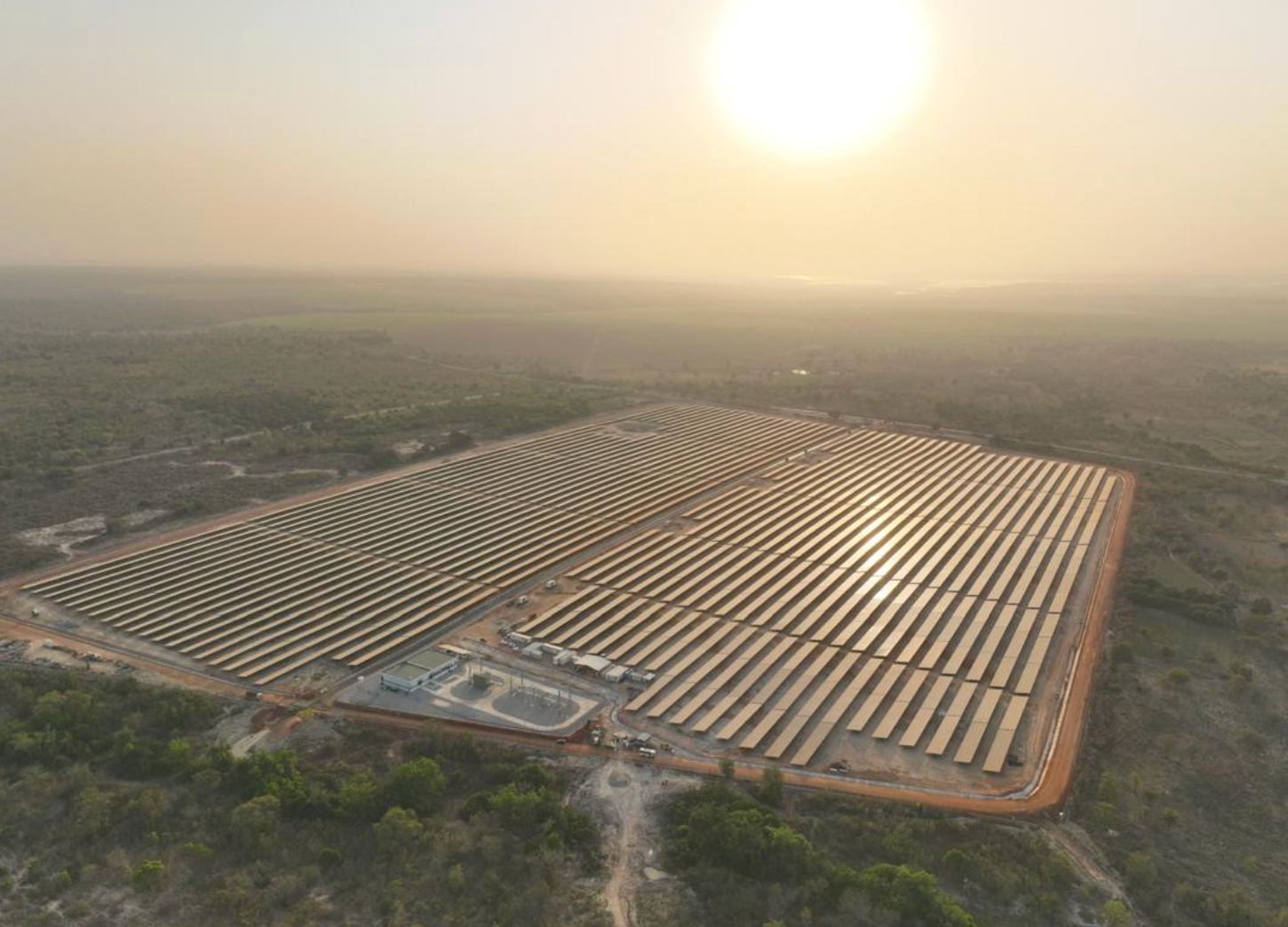
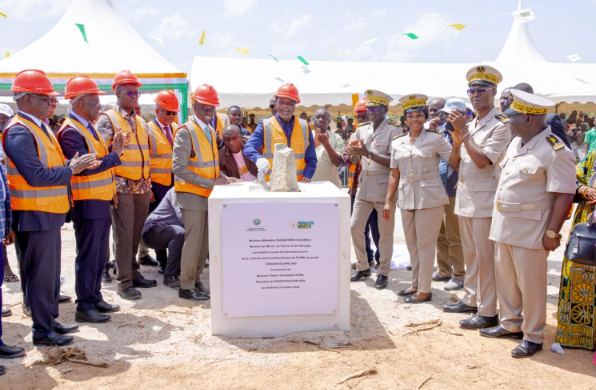
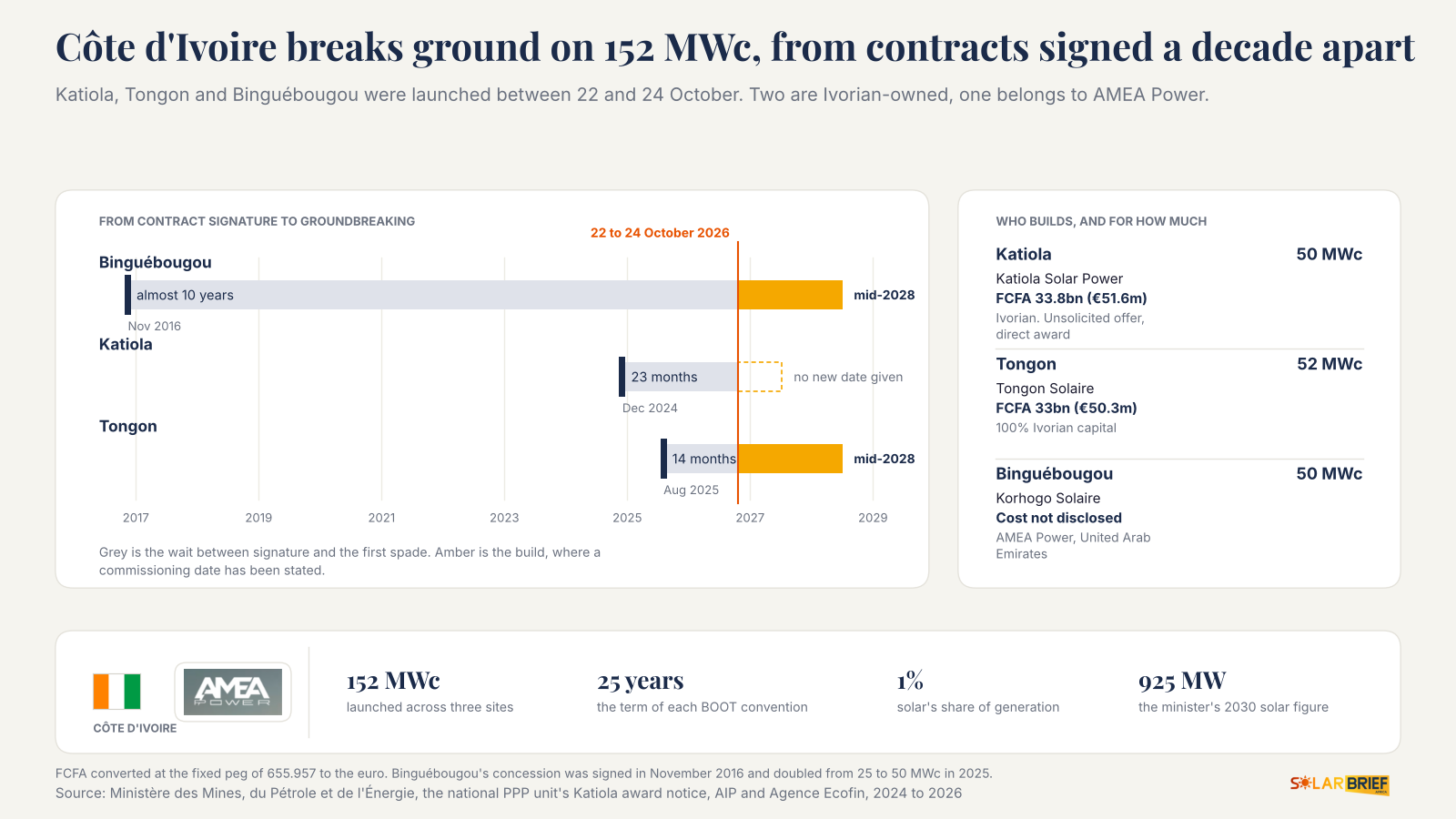
Mamadou Sangafowa-Coulibaly, minister of mines, petroleum and energy, broke ground on three northern solar plants between 22 and 24 October: Katiola in Hambol at 50 MWc, Tongon at M’Bengué in Poro at 52 MWc, and Binguébougou near Korhogo, also in Poro, at 50 MWc. All three are build-own-operate-transfer concessions running 25 years, with the developer financing construction. Tongon and Binguébougou are due in service by mid-2028.
Who is building them
Two of the three are Ivorian. Tongon Solaire SAS, whose capital is entirely Ivorian, is spending about FCFA 33bn (€50.3m) on a plant expected to generate 90 GWh a year and inject 43.2 MWac, employing around 500 people during construction. Katiola Solar Power, trading as JC-Monfort, holds a FCFA 33.8bn (€51.6m) concession that the award notice records as coming from a spontaneous offer settled by direct negotiation, approved by decree on 21 May 2025. Binguébougou belongs to Korhogo Solaire, a subsidiary of the Emirati developer AMEA Power, under a concession signed in November 2016 and doubled from 25 to 50 MWc last year. Its cost has not been disclosed.
Where this fits in the 2030 plan
Solar supplies about 1% of Ivorian electricity, against 69% from gas and 30% from hydro. The ministry is targeting 15 plants and 1,262 MWc by 2030, which would lift renewables to 45% of the mix, and the minister has put the contribution of new solar at 925 MW by 2030, up from 42 MW this year. These three sites are 152 MWc of that. Tongon was one of four conventions totalling 210.3 MWc signed in August 2025, alongside Bondoukou, Touba and Laboa, the last two of which run under the IFC’s Scaling Solar programme.
What it means
For a developer looking at Côte d’Ivoire, the award notices matter more than the capacity figures. Katiola was never tendered: the state took an unsolicited proposal, negotiated directly and approved the result by decree, and two of the three plants are Ivorian-owned, one of them raising FCFA 33bn at home. The route into this market is not only the competitive window. The counterweight is time, because Binguébougou’s concession dates from November 2016 and the first spade went in almost ten years later, while Katiola’s own convention set a commissioning deadline of the fourth quarter of 2026, which is the month construction actually began. For an IPP, the gap between signature and steel is the number to underwrite.
Sources: Ministère des Mines, du Pétrole et de l’Énergie, Côte d’Ivoire PPP unit, Avis d’attribution n°001/2025