Africa50 is a pan-African infrastructure investor and asset manager that operates across the continent under its mission to bridge existing infrastructure gaps. Headquartered in Casablanca, Morocco, Africa50 was established by the African Development Bank (AfDB) and currently has 36 shareholders, made up of 32 African countries, AfDB, the Senegal-headquartered Central Bank of West African States and Morocco’s central bank Bank Al-Maghrib. South Africa’s Public Investment Corporation became the most recent shareholder last year following a $40 million investment.
The institution mobilizes large-scale capital for high-impact projects across sectors including energy, transport, and information and communication technologies. Details on its LinkedIn page explains how Africa50 takes a multi-tiered approach to infrastructure development. While its project development arm focuses on converting early-stage ideas into investment-ready projects, its project finance business line takes over once projects reach financial close, deploying primarily equity and quasi-equity investments that typically exceed $20 million and hold significant minority stakes.
Here, Africa50’s approach mirrors private equity models while maintaining a dual focus on both financial returns and development outcomes, as it remains engaged throughout the project lifecycle. According to figures on its website, Africa50 has invested in 32 infrastructure projects across 33 African countries to date, with its impact bringing an aggregated value of over $8 billion.
Among the energy infrastructure projects Africa50 has been involved in to date is a portfolio of six utility-scale solar parks in Egypt that form part of the 1.5 GW Benban solar complex. The six projects, with a combined capacity of 400 MW, were developed during the second round of Egypt’s second feed-in-tariff program. Africa50 is a project development and long-term equity partner in the parks, holding a 25% equity stake.
Broad shareholder base
Beyond its core shareholders, Africa50 has mobilized broader institutional investment through its Infrastructure Acceleration Fund (IAF). It is a 12-year closed-end private equity fund, first announced in 2021, financing transformative infrastructure.
Africa50 promotes the fund on its website by explaining that investors “benefit from exposure to Africa50’s pan-African footprint, project development and de-risking expertise, late-stage equity investing, strong relationships with African governments, and access to a pipeline of attractive investment opportunities.”
To date, IAF has reached approximately $330 million in capital commitments as it works towards a final close of $500 million.
Partners that have backed the fund include the International Finance Corporation (IFC), which invested $20 million in equity, and UK development finance institution British International Investment, which also committed $20 million. Other partners include the West African Development Bank and a number of institutional and sovereign investors including the Nigerian Sovereign Investment Authority, the Arab Bank for Economic Development in Africa, CDC Sénégal, CDC Benin and CNSS Togo.
Away from its infrastructure fund, Africa50 also works alongside partners in individual projects, for example with Norwegian developer Scatec and Norway-based bank Norfund on its solar plants in Egypt. Another example takes the shape of the Nachtigal Hydropower Plant in Cameroon, which sees Africa50 hold a 15% stake alongside French developer EDF (40%), IFC (20%), the Republic of Cameroon (15%) and French investment company STOA (10%).
Africa50’s diverse shareholder base, encompassing both African governments and major institutional investors, reflects its role as a mobilizer of continental capital for infrastructure development. At its core, Africa50 is ultimately acting as a bridge between African governments and private investors, leveraging its shareholder base to reduce perceived implementation risk. By securing government support to lessen implementation risks and delays, and engaging primarily as an active minority sponsor with strong co-developers to improve project execution, Africa50 addresses a critical concern for long term investors.
Decentralized commitments
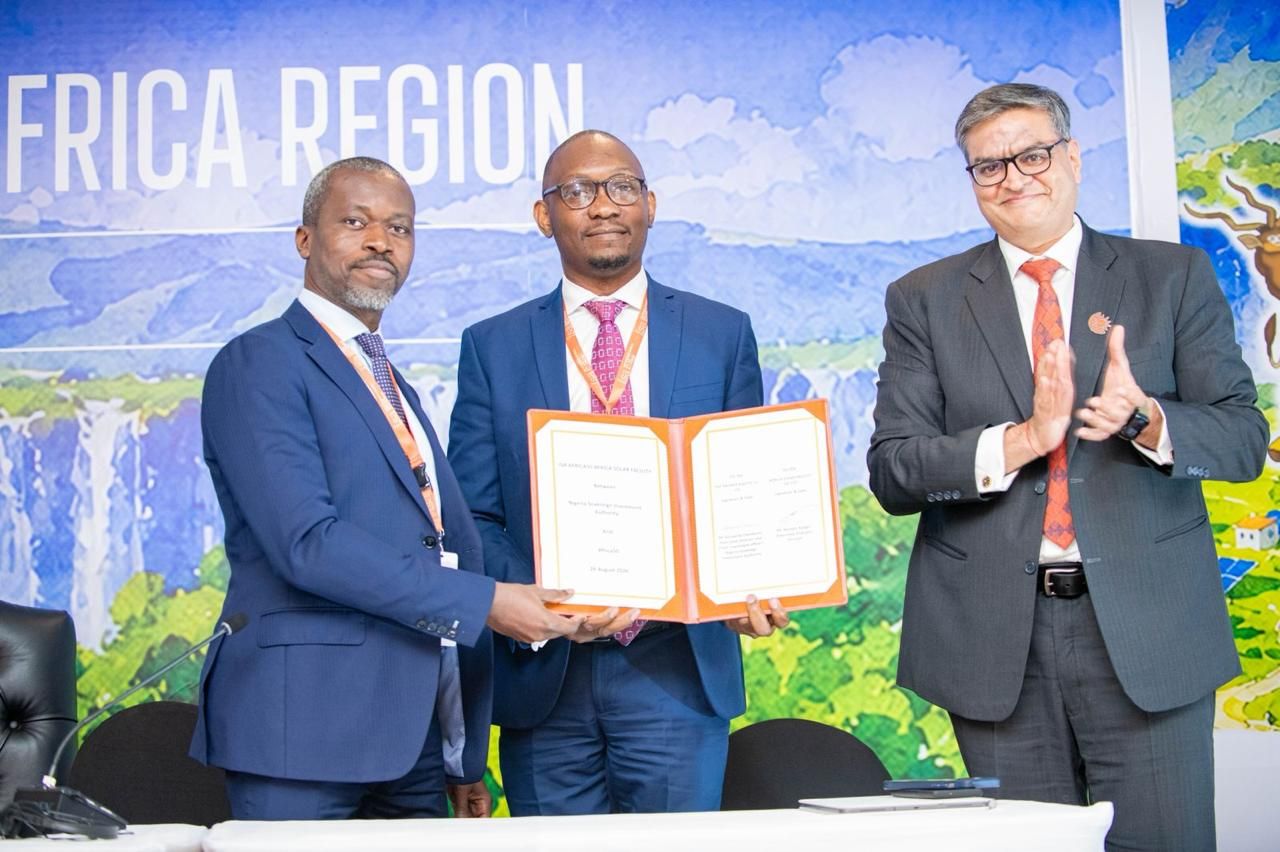
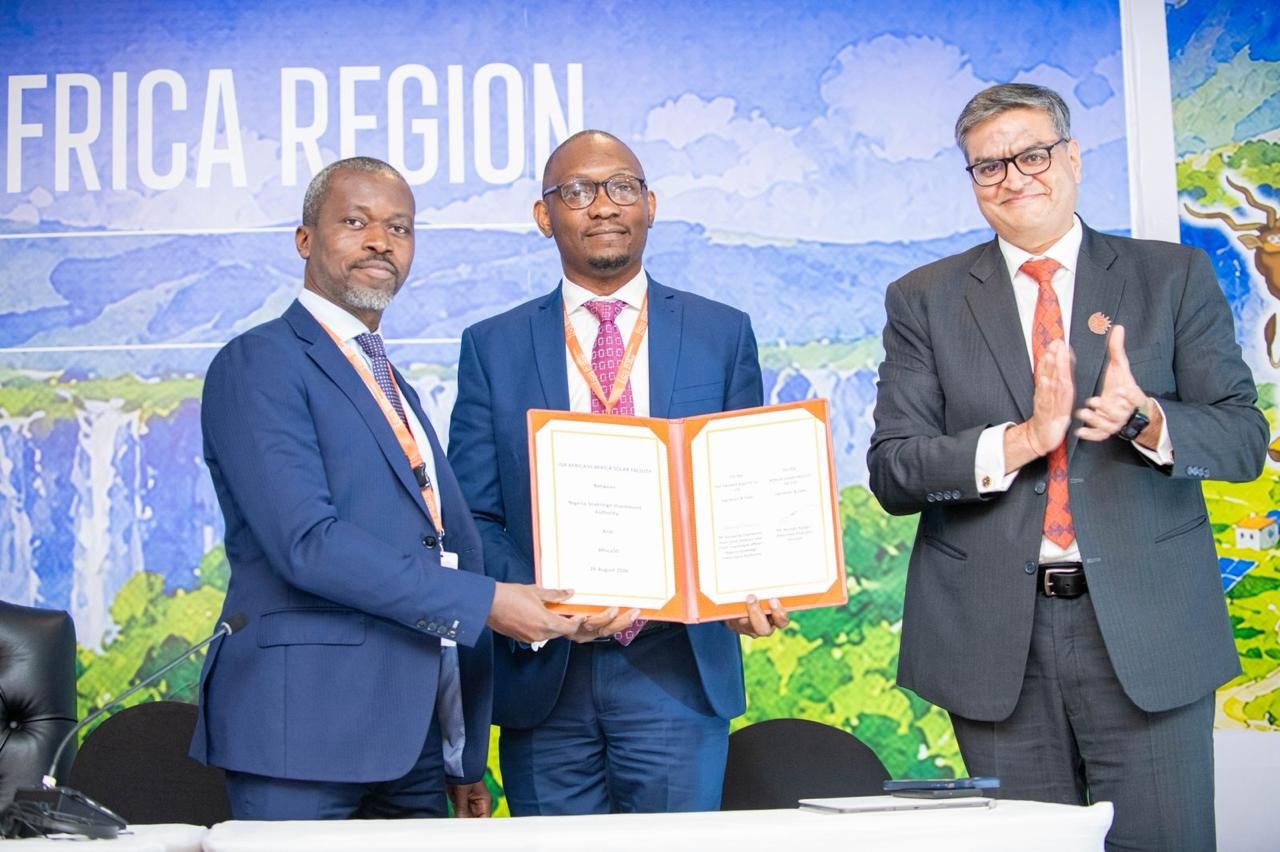
Africa50 recently secured $71 million in commitments for a fund dedicated to decentralized renewable energy systems in Africa. A statement released in early September confirmed backers of the latest agreement include the International Solar Alliance, Nigeria Sovereign Investment Authority and World Bank Group.
The fund will provide equity to distributed renewable energy companies across Africa that are operating in the C&I, clean-cooking, E-mobility, minigrid, standalone solar systems and value chain development sectors. Its overarching aim is to scale private-sector-led deployment, while creating opportunities for institutional and private capital to invest in the decentralised renewables sector.
Africa50 is aiming for its distributed renewable energy fund to reach $200 million by the time of its final close. The institution says equity is key to expanding mini-grids and home solar systems across Africa. “The operationalization of the fund marks a step forward in developing scalable solutions to Africa’s energy access and financing needs,” a statement published on its social media channels explains.
What it means
Africa50’s fund for decentralized systems signals that distributed renewable energy systems are the backbone of Africa’s ongoing energy transition. Estimates published by the International Energy Agency estimates that annual investments in minigrids need to reach $5 billion by 2035 to reach universal access in sub-Saharan Africa, alongside a further $3 billion for home solar systems, therefore a considerable scale up will be required. On a broader scale, Africa50's structure and operations reveals that Africa’s infrastructure gap cannot be closed through traditional donor-dependent financing alone. African governments, western donors, and other bilaterals have traditionally provided the majority of funding for infrastructure projects in Africa, but that picture appears to be shifting. By mobilizing domestic African capital, Africa50 is reducing this dependency and creating a self-reinforcing cycle where bankable projects attract African investors, which in turn attracts more international partners and private capital.
Sources: Africa50