 Égypte
Work is underway in Egypt to develop localized battery manufacturing capabilities.
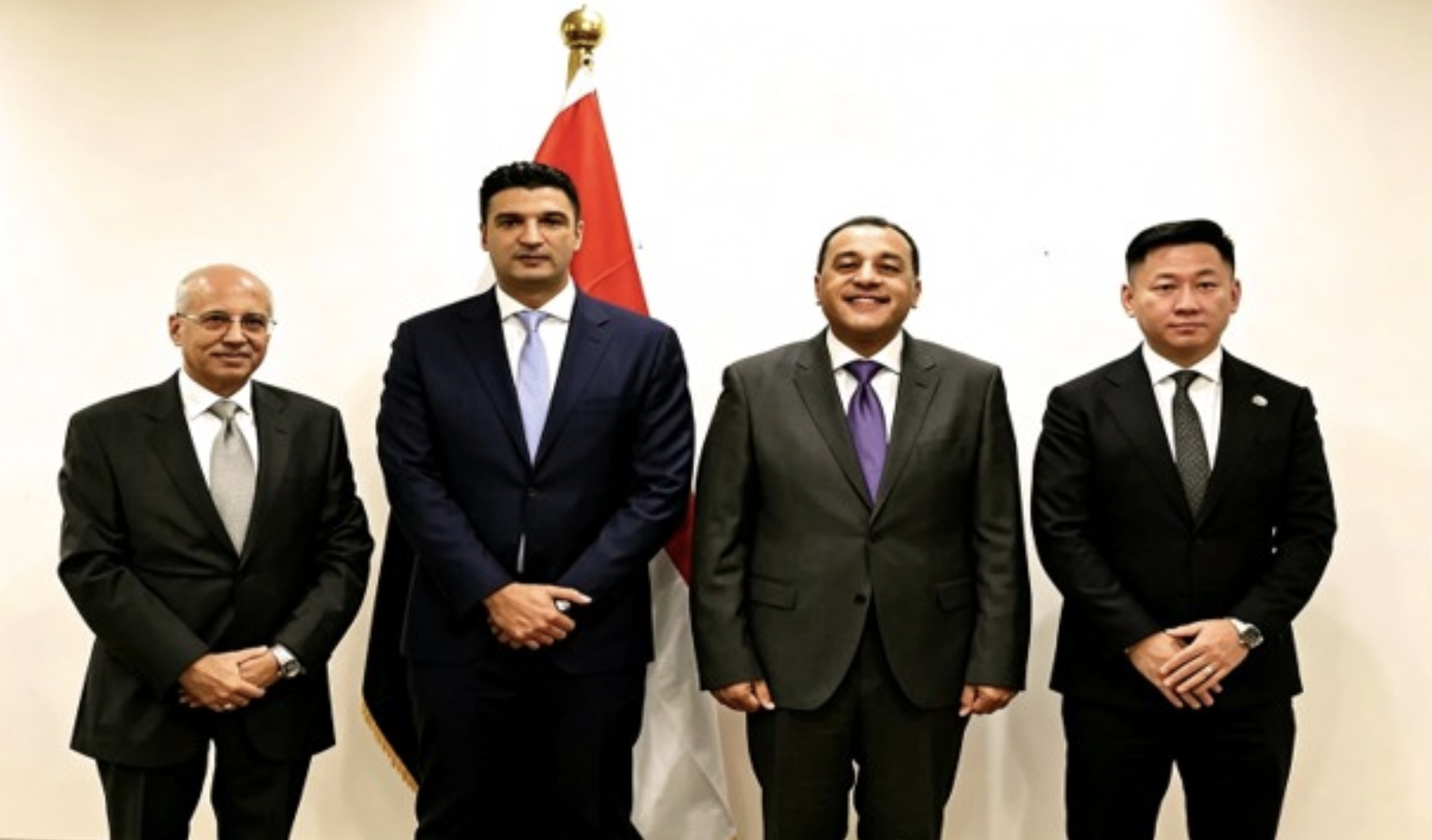
China's Contemporary Amperex Technology Co., Limited (CATL), one of the world's largest manufacturers of lithium-ion batteries for electric vehicles and energy storage systems, has entered into a cooperation agreement with Egyptian battery manufacturer Battery Manufacturing in Egypt (BME). BME is a joint venture between Egyptian commercial vehicle manufacturer MCV and automotive industry solutions provider Auto D.
Under the terms of the agreement, BME plans to source battery cells from CATL, while CATL will support BME with battery pack technology licensing, production equipment and technical training, allowing the manufacturer to assemble and produce battery packs in Egypt.
According to a press release published by CATL, a battery pack facility will be developed and fully funded by BME. The facility is set to have an initial annual production capacity of 1 GWh and will focus on battery packs for heavy-duty commercial vehicles. There are also longer-term plans to expand annual capacity to 5 GWh and broaden its product portfolio to include passenger vehicle battery packs and energy storage systems for solar and wind applications.
The agreement was signed on September 13 in the presence of Egyptian Prime Minister Mostafa Madbouly and marks a significant step in the country’s localized industrial capabilities. According to an Egyptian cabinet statement, initial investment in the project exceeds EGP 2 billion ($39 million).
Battery storage manufacturing in Egypt
Beyond CATL and BME, Egypt's battery manufacturing pipeline includes several major international partnerships.
China's Sungrow broke ground in August on a $50 million battery energy storage system (BESS) factory with 10 GWh of annual capacity in the China-Egypt TEDA zone in Ain Sokhna, northeastern Egypt. Production is scheduled to begin in April 2027. Egyptian authorities have described the plant as the first specialized BESS manufacturing facility in the Middle East and Africa.
In June, UAE-based developer AMEA Power signed an agreement with Chinese manufacturer Gotion and China Energy International Group to establish a battery storage factory in Egypt with 3 GWh of annual production capacity. Elsewhere, Egyptian company Kemet signed a cooperation agreement with Chinese battery manufacturer Cornex in January to develop a $200 million battery storage factory with 5 GWh annual capacity.
Collectively, these projects amount to around 19 GWh of planned annual capacity. The facilities differ in scope, ranging from pack and system assembly to cell production, and only Sungrow has announced a planned production start date to date.
Expanding battery pack production capacity in Egypt creates opportunities for backward integration into cell manufacturing and could eventually support the country's renewable energy targets. With Egypt aiming for 14.3 GWh of battery energy storage capacity by 2028, locally assembled battery packs could reduce import costs and accelerate deployment timelines for grid-scale and distributed storage projects.
Solar manufacturing in Egypt
A recent report by Ember and African Tech Futures Lab (ATFL) into Africa's continued solar rollout highlighted Egypt's position as a regional leader in solar manufacturing too.
According to the report, Egypt is expected to produce around 2 GW of solar panels this year, out of an estimated 3.5 GW of panel output across Africa. This means more than half of the continent's solar panel production in 2026 is set to come from Egypt, although the report cautions that manufacturing data is limited and the figures are difficult to state precisely.
The report said that in Egypt, "the rise in solar manufacturing is only just beginning", identifying three large solar panel manufacturing plants at different stages of development.
Singapore-headquartered manufacturer EliTe Solar's production plant in Ain Sokhna was inaugurated by the prime minister in January. Its $115 million complex pairs 2 GW of cells with 3 GW of modules and employs about 800 people, according to Ember and ATFL's report, roughly 700 of them Egyptian.
Chinese manufacturer Sunrev Solar laid the cornerstone for its facility in the Ain Sokhna Industrial Zone in June 2025. Its $200 million plan is expected to add 2 GW each of cells and modules. The report notes that no production start had been confirmed as of July, and assumes no output from the plant this year.
The third plant is ATUM Solar, a joint venture between China's JA Solar, UAE’s Global South Utilities, Bahrain’s Infinity Capital and Egypt's AH, which broke ground in December 2025 with completion scheduled for early 2027. Its $210 million project adds 2 GW each of cells and modules and, according to the report, "carries the only commitment by an African plant to buy local glass and aluminium".
Once fully operational, the three plants covered by the report will represent 6 GW of cell and 7 GW of module manufacturing capacity, reaffirming Egypt as a manufacturing powerhouse in North Africa. However, the report notes that Egypt's new capacity is predominantly geared toward export to the US, where new tariffs on imported cells and panels take effect from December this year. Ember and ATFL suggest this could see more of the output used in domestic markets.
What it means
The development of battery and solar manufacturing capacity in Egypt addresses one of Africa's most pressing energy transition challenges, namely import dependency. Africa currently imports the vast majority of its solar panels and battery components, which can slow deployment and inflate project costs. By building local manufacturing capacity, Egypt begins to reduce the foreign currency burden of renewable energy projects and shorten supply chains, which may prove a critical advantage given regional logistics constraints. The around 19 GWh of battery manufacturing capacity under development, paired with 6 GW of cell and 7 GW of module capacity, could allow downstream projects to source components locally and bring them to market faster, particularly if US tariffs redirect solar output toward domestic markets. This would support Egypt in reaching its renewables targets.
Sources: CATL